
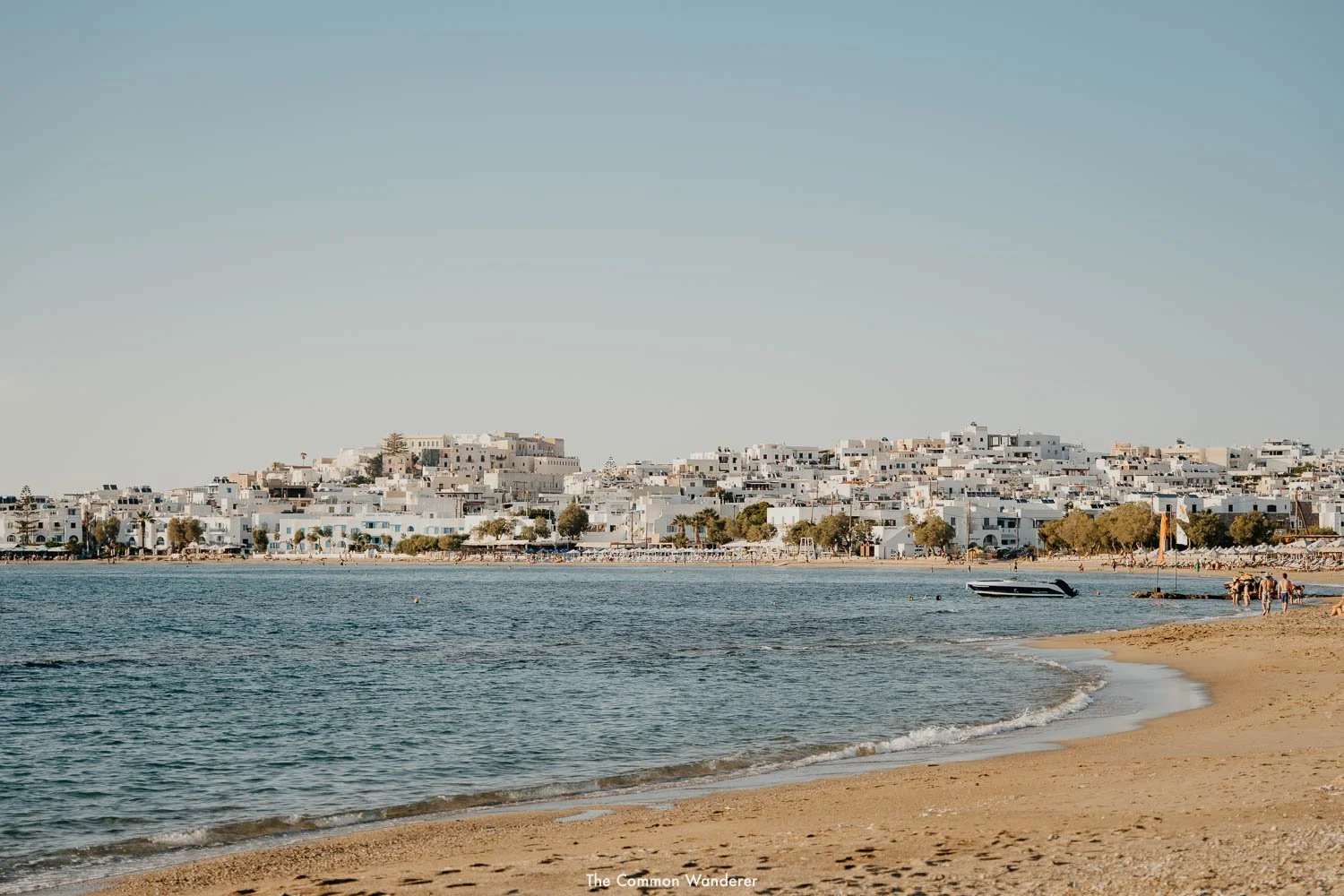
Naxos is the largest island in the Cyclades and, in our opinion, the most rewarding. After a month visiting the island, this is the planning guide we wish we'd had before we arrived.
We never planned to visit Naxos.
Like most first-timers to the Cyclades, we had the obvious islands mapped out - Santorini, Mykonos, Paros, and Naxos simply didn't make the cut. Too big, too quiet, too far from the postcard version of the Cyclades we thought we were looking for.
An opportunity came up to photograph some hotels during our eight weeks in the islands. We boarded a ferry from Paros with mild curiosity and genuinely low expectations.
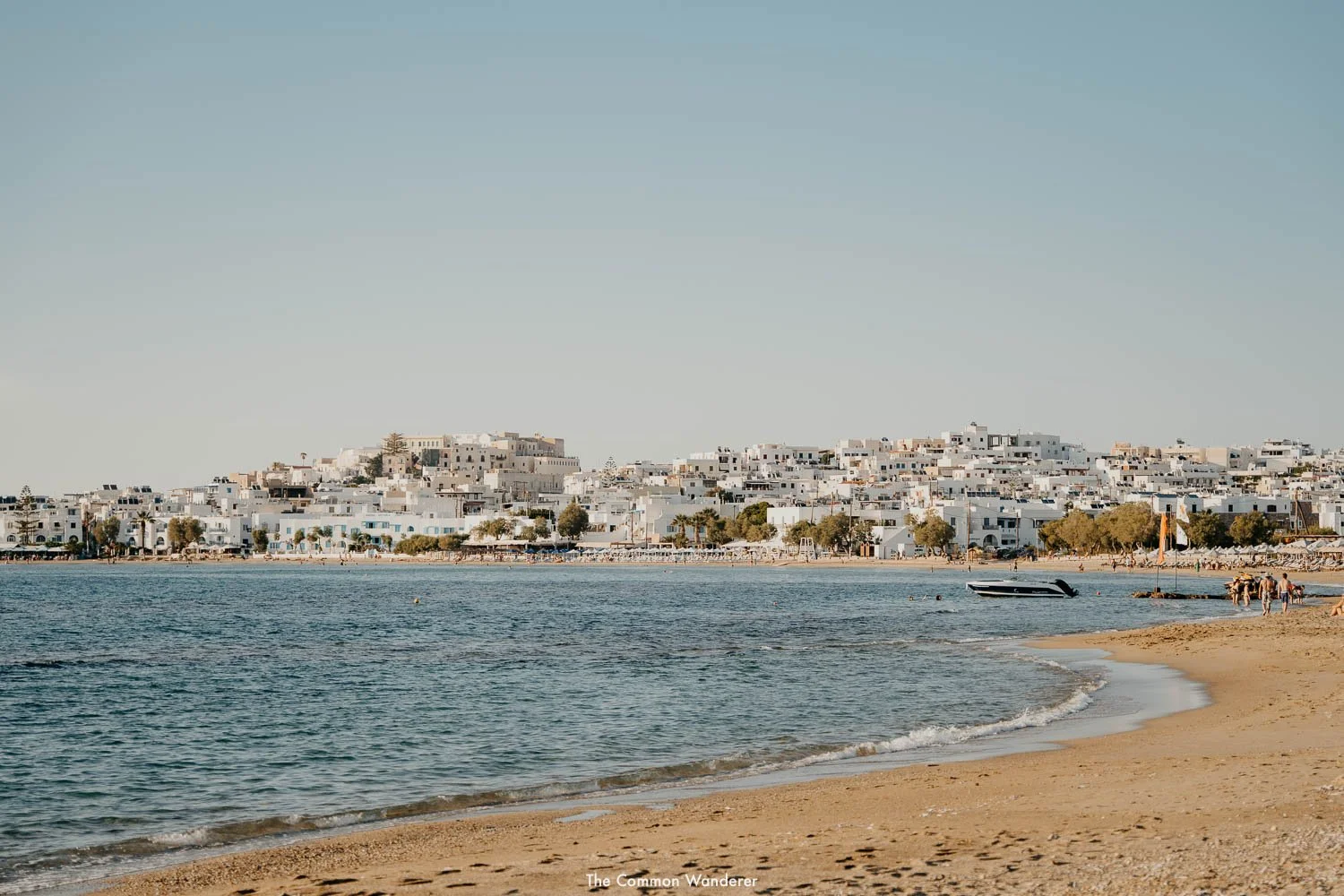
That evening, sitting barefoot on the beach at Agios Georgios with a Naxian Spritz in hand and a spectacular Aegean sunset ahead of us, we looked at each other and silently accepted that we'd been completely wrong about this island.
Naxos is the largest island in the Cyclades and in many ways the most varied. Its landscapes are wilder and more dramatic than anything we'd seen elsewhere in the archipelago, with limestone peaks and fertile valleys giving way to golden bays and quiet coves.
It's the food bowl of the Cyclades, producing olive oil, citrus, grapes, Gruyere cheese and the humble potato, a staple so beloved here it has its own annual festival.
The mountain villages feel lived in. The tavernas are full of families and locals, not just day-trippers. The beaches in the southwest are, without exaggeration, some of the best we've seen in Europe.
In one unhurried day you might explore ancient Byzantine ruins, wander marble-paved mountain villages, windsurf in a shallow Aegean lagoon, swim in clear blue water and eat the best meal of your Greek trip, and still find time to watch the sunset from the highest peak in the Cyclades. Naxos is that type of island.
We came for a few days. We stayed for a month.
This guide is everything we learned about Naxos in that time, organised into the planning guide we wish we'd had before we arrived.
LOVE OUR PHOTOS? Edit like us with our European Summers Preset Packs, and mobile video filters, inspired by the warm hues and vibes of summers spent in Europe
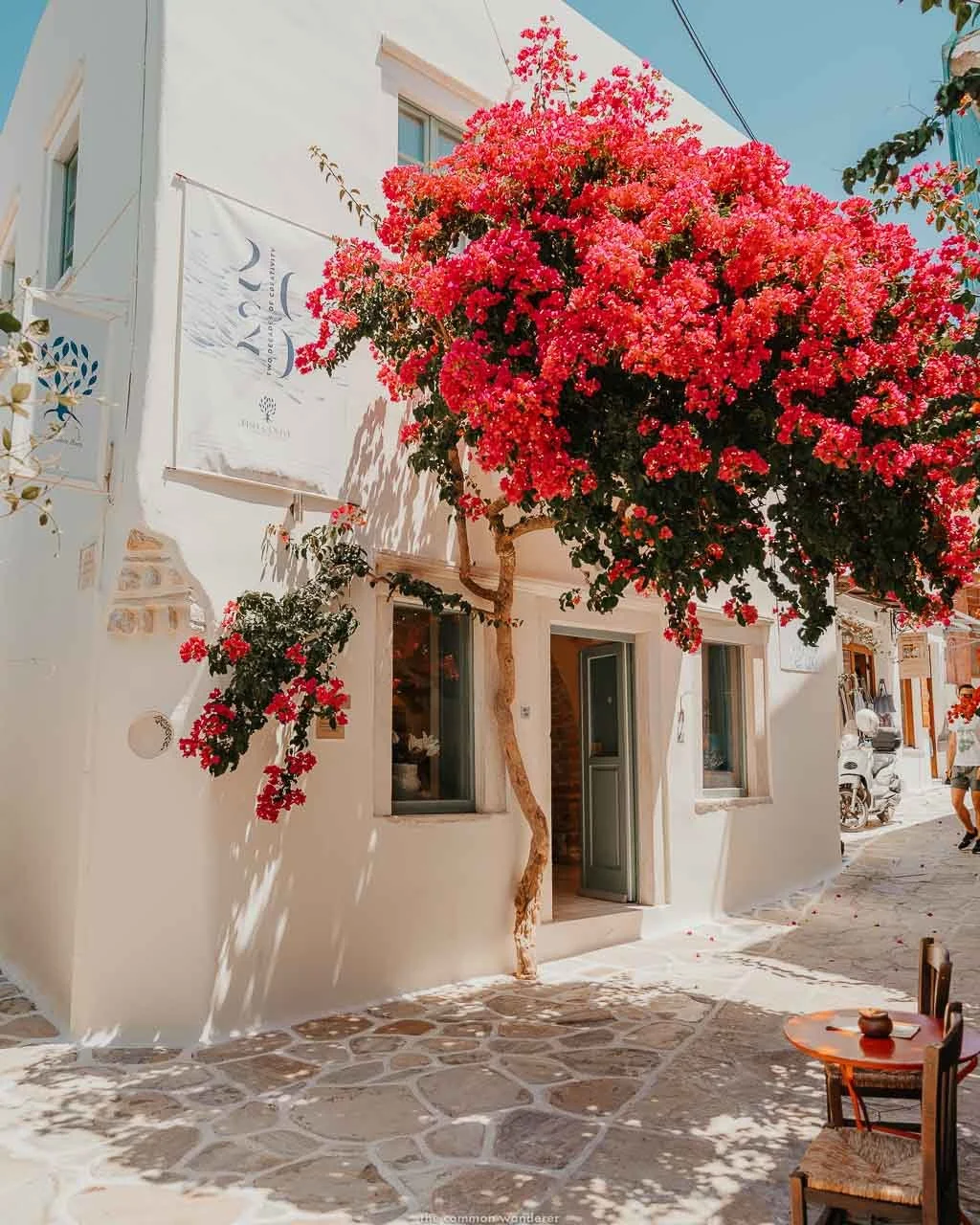
NAXOS ISLAND OVERVIEW
BEST FOR | Food lovers, hikers, windsurfers, beach days, village explorers, those who want the real Cyclades without the Santorini crowds
BEST TIME TO VISIT | May and September — warm sea, manageable crowds, lower prices. Avoid August if the meltemi winds or peak crowds bother you
HOW LONG | 5 nights minimum. 7 is the sweet spot.
BASE YOURSELF | Chora for first-timers. Plaka or Agios Prokopios for beach-first travellers.
DON'T MISS | The mountain villages (Apeiranthos, Halki, Koronas), the western beaches, Portara Gate at sunset, the food
GETTING THERE | Ferry from Athens (4-6 hrs), the only way worth doing it. Domestic flights from Athens also available
GETTING AROUND | Rent a car - the best bits require wheels. Buses cover the main beaches and towns reliably
CURRENCY | Euro (€)
BOOK YOUR NAXOS TRIP
WHERE TO STAY |Ammothines Cycladic Suites (luxury) · Naxian Utopia (mid-range) · Katerina Roza Apartments (budget)
Full breakdown in our Where to Stay on Naxos guide
TOURS & EXPERIENCES | Download the GetYourGuide app to book sailing trips, cooking classes, and island tours, with 5% off your first app booking
FERRIES | Book your ferry to Naxos from Athens or the surrounding Cyclades through FerryHopper
CAR HIRE | Car hire is the easiest way to reach Naxos' quieter beaches, mountain villages and interior
GET CONNECTED | Set up an Airalo eSIM before you fly and have data ready to go when you arrive in Greece
TRAVEL INSURANCE | Get a quote from World Nomads, with cover available for 150+ activities
SPEND SMARTER IN GREECE | Get a Wise card to pay in Euros and skip foreign transaction fees
WHERE IS NAXOS?
Naxos sits in the heart of the Aegean Sea, about 165km southeast of Athens and right in the middle of the Cyclades archipelago. It's the largest island in the group, considerably bigger than Paros, Mykonos or Santorini, and that size is one of the things that makes it different from everything around it.
It's surrounded by some of the most visited islands in Greece: Paros is 30 minutes away by ferry, Mykonos an hour to the north, Santorini two hours to the south. The Small Cyclades, Koufonisia, Iraklia and Schinoussa, sit just off its eastern coast and are easily reached as day trips.
Getting to Naxos from Athens is straightforward. Getting between Naxos and the surrounding islands is equally easy, which makes it an excellent anchor point for a broader island-hopping trip.
NAXOS VS PAROS: WHICH ISLAND SHOULD YOU VISIT?
We love Paros. We've spent weeks there and written extensively about it (start with our Paros Guide).
But Naxos is a different proposition, and for certain kinds of travellers, it's the better island.
Here's the honest comparison:
PAROS
Paros is more polished, more immediately beautiful and easier to navigate. Naoussa is one of the most photogenic harbour towns in the Cyclades.
The beaches are excellent, the restaurants are excellent, and the whole island has a refinement that Naxos doesn't quite match.
It's also more expensive, busier in peak season and, like everywhere in the Cyclades, increasingly finding itself on the Instagram circuit.
NAXOS
Naxos is rawer, larger, more varied and, in our opinion, more rewarding for those willing to put in a little effort. The food is better. The mountain villages are more authentic.
The beaches in the southwest are, by any measure, extraordinary. The hiking, particularly Mt Zas, is genuinely special. And the sheer scale of the island means you can spend a week here and still feel like you've only scratched the surface.
The traveller who will love Paros is someone who wants a beautiful, well-organised Cycladic island experience with excellent restaurants and nightlife within easy reach.
The traveller who will love Naxos is someone who wants all of that, plus the ability to get in a car and disappear into marble villages, fertile valleys and empty coastline for the day.
If you're island-hopping and have time for both, do both. They're 30 minutes apart by ferry and genuinely complement each other.
Start with Naxos, finish on Paros.
A BRIEF HISTORY OF NAXOS ISLAND
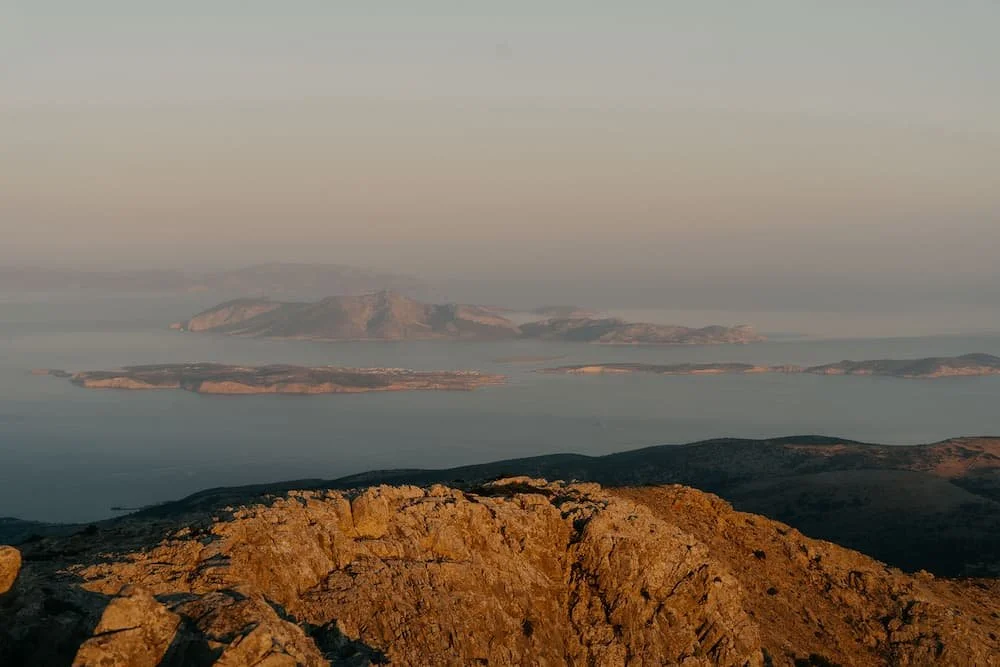
Here's something worth knowing before you arrive: the mountain you can see from almost anywhere on the island, Mt Zas, is named after Zeus, the king of the gods, because according to Greek mythology, this is where he was raised.
The cave on the slopes below the summit, Zas Cave, has had continuous human presence since the Neolithic period. We hiked up there ourselves, and standing at the peak watching the sun drop over the Aegean, it's not hard to understand why the ancient Greeks decided the gods lived here.
Naxos is one of the oldest continuously inhabited places in the Cyclades. The Mycenaeans were here. The ancient Greeks established it as a prosperous trading centre, exporting marble and emery stone that were prized across the ancient world.
It was wealthy enough to commission some of the largest kouroi statues in Greece, two of which still lie unfinished in the olive groves outside Melanes, abandoned mid-production thousands of years ago.
Theseus stopped here on his way back from Crete after killing the Minotaur, eloped with Ariadne, the daughter of King Minos, and then, depending on which version of the myth you believe, either abandoned her on Naxos or was forced to leave her by the gods. Dionysus found her there, married her, and placed her crown among the stars. The island has been associated with wine ever since.
The Venetians arrived in the 13th century and left behind the kastro in Chora, the towers scattered through the mountain villages and a Catholic community that still exists today. The Ottomans followed, then the Greeks reclaimed the island after the 1821 Revolution.
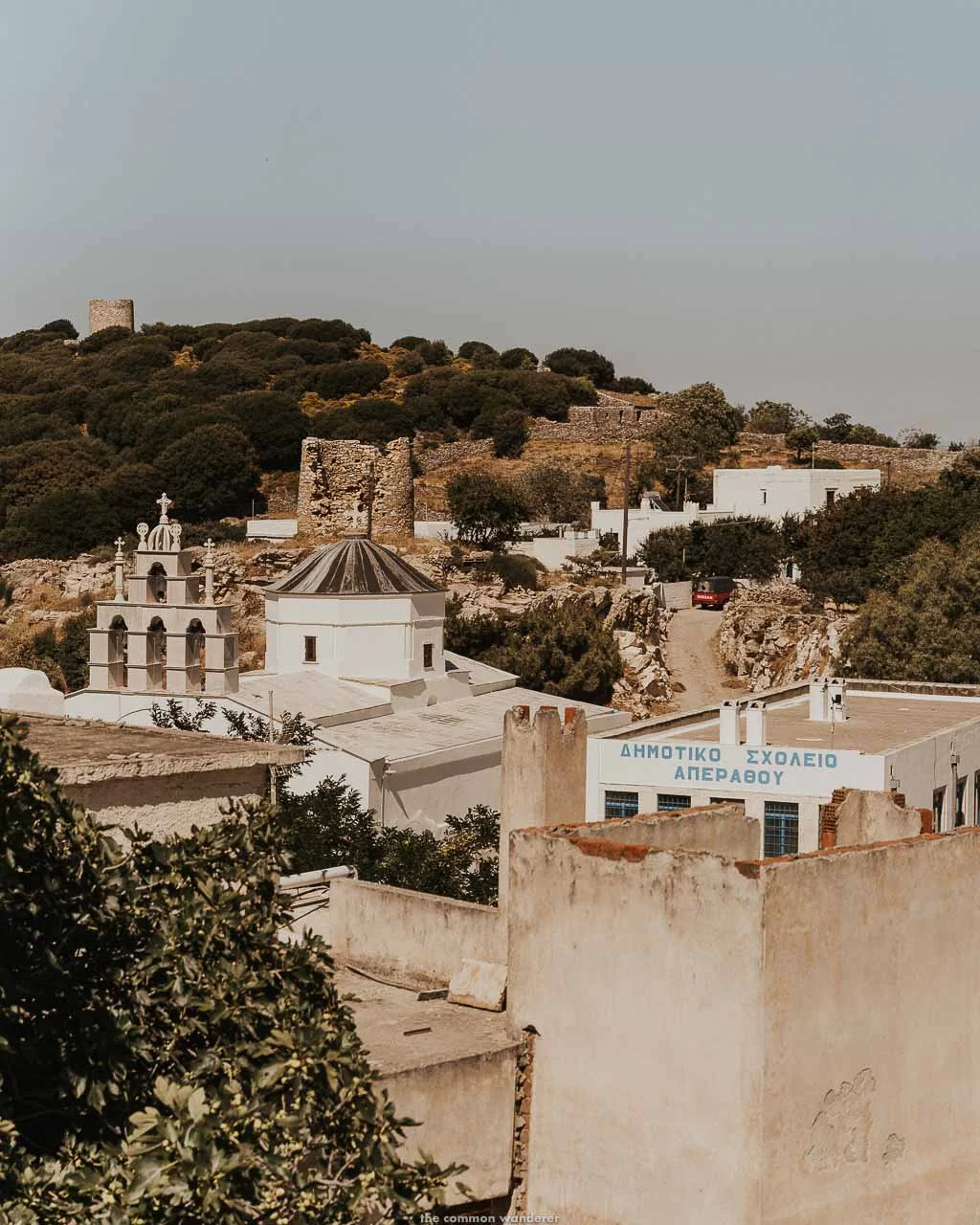
All of this history is woven into the stones and streets you'll walk every day on Naxos. The marble-paved lanes of Apeiranthos. The Byzantine churches in the citrus groves outside Halki. The unfinished kouroi lying in the fields as if the sculptor simply put down his tools and walked away.
And this history is what makes Naxos so appealing beyond the beaches.
NAXOS HAS NO INTERNATIONAL AIRPORT
If you're planning to fly directly to Naxos, think again. The island does not have an international airport, unlike nearby Mykonos or Santorini.
There is a small domestic airport on the island, meaning daily flights from Athens are possible. But whether by geography or genuine good fortune, the absence of an international airport is one of the best things about Naxos.
It keeps the island naturally protected from the kind of mass tourism that has fundamentally changed its neighbours. No cruise ships either. Every visitor arrives the same way, by ferry across the Aegean, which immediately sets the right tone.
There is occasional talk of an international airport being built. We hope it doesn't happen.
THE BEST WAY TO GET TO NAXOS
The ferry. Every time.
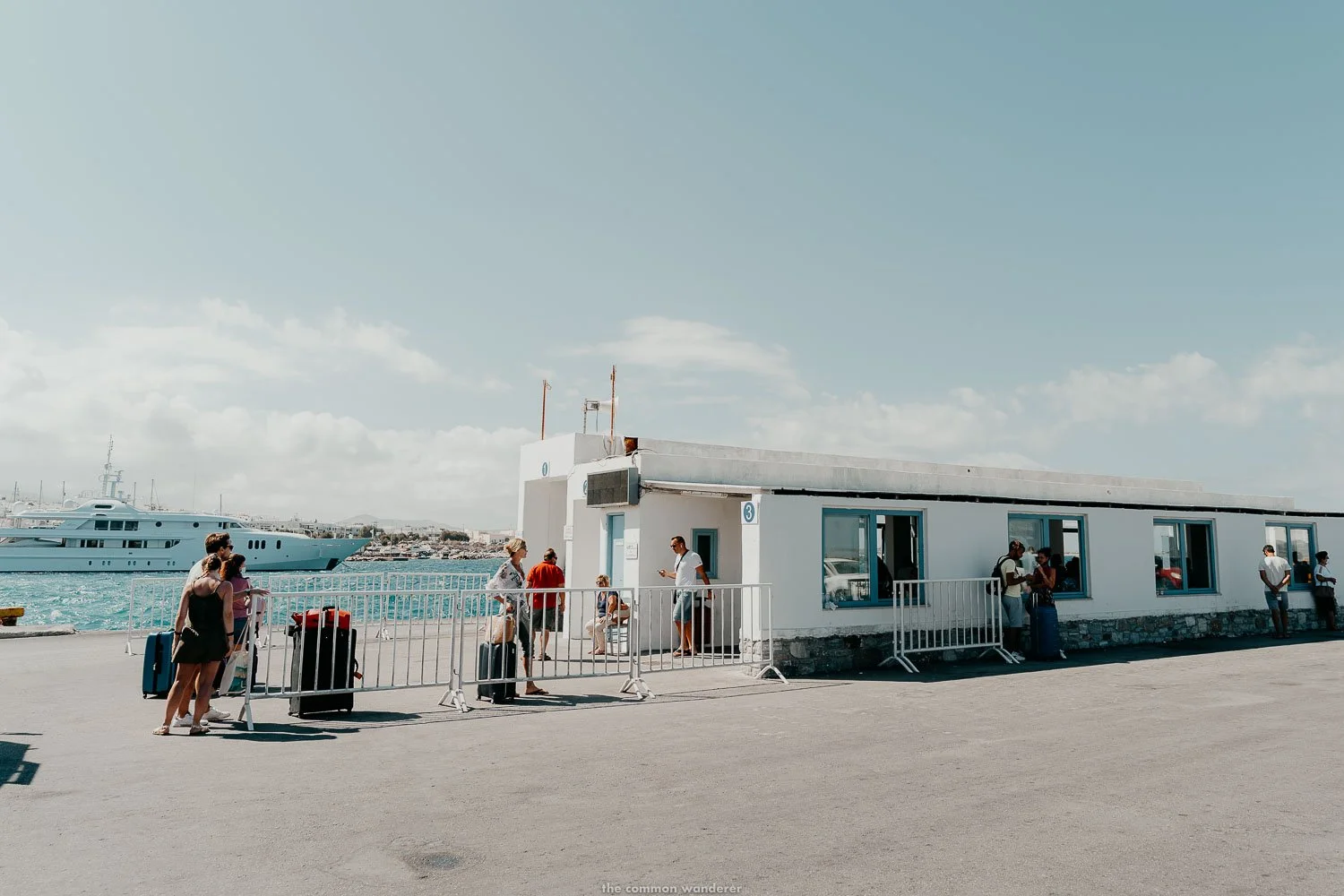
Naxos is well connected to Piraeus, the main port of Athens, with multiple daily sailings operated by Blue Star Ferries, Seajets and Fast Ferries. The crossing takes around 4 hours on a conventional ferry and around 3.5 hours on a high-speed service.
Book your tickets well in advance in summer; sailings fill up fast, and once onboard, head straight to the upper deck to claim a sofa or seat before everyone else has the same idea.
We booked all our tickets through FerryHopper, which makes comparing routes, operators and times straightforward. Highly recommended.
Domestic flights from Athens are available year-round and take around 45 minutes. Worth considering if time is short, but the ferry is a genuinely enjoyable experience and costs a fraction of the price.
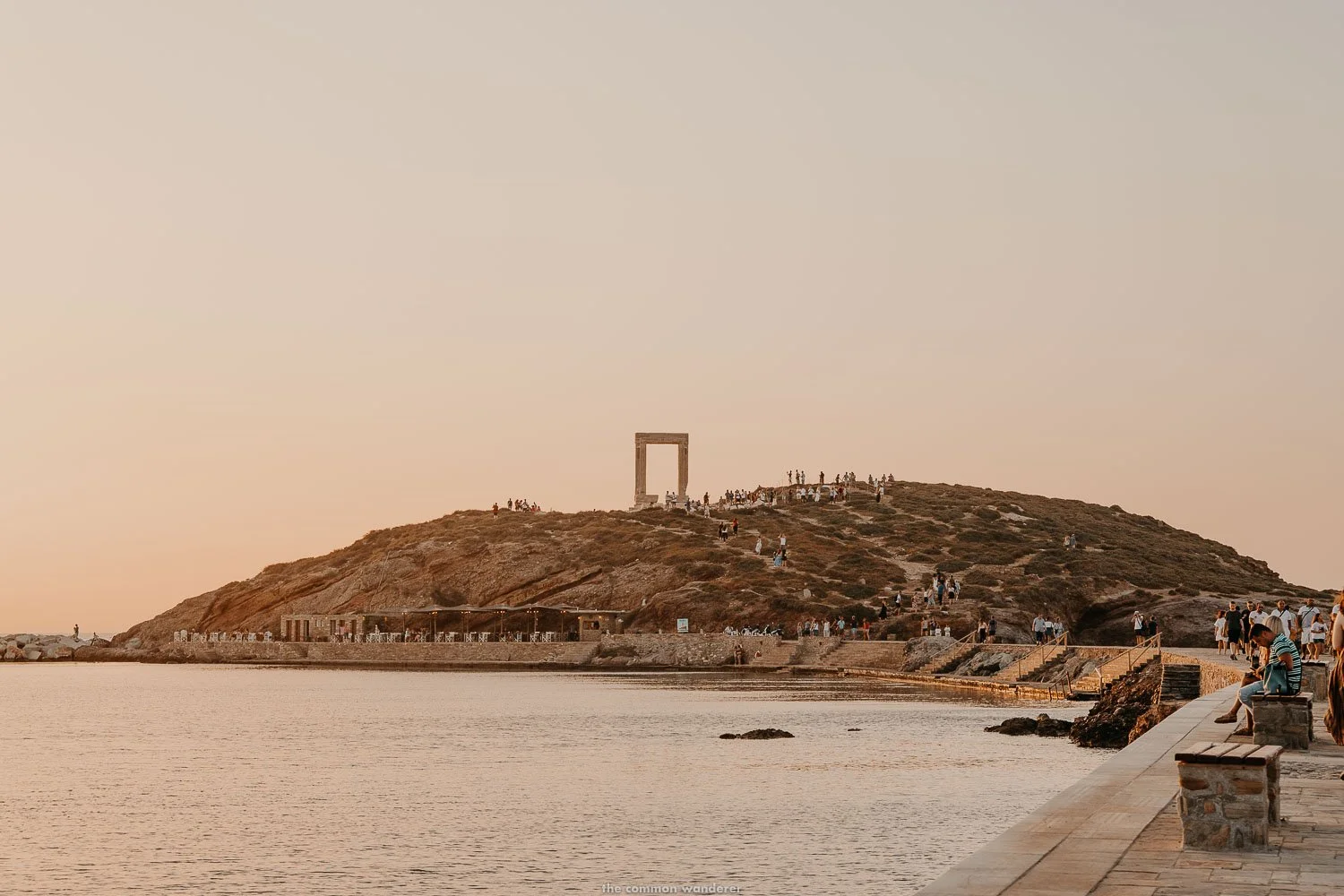
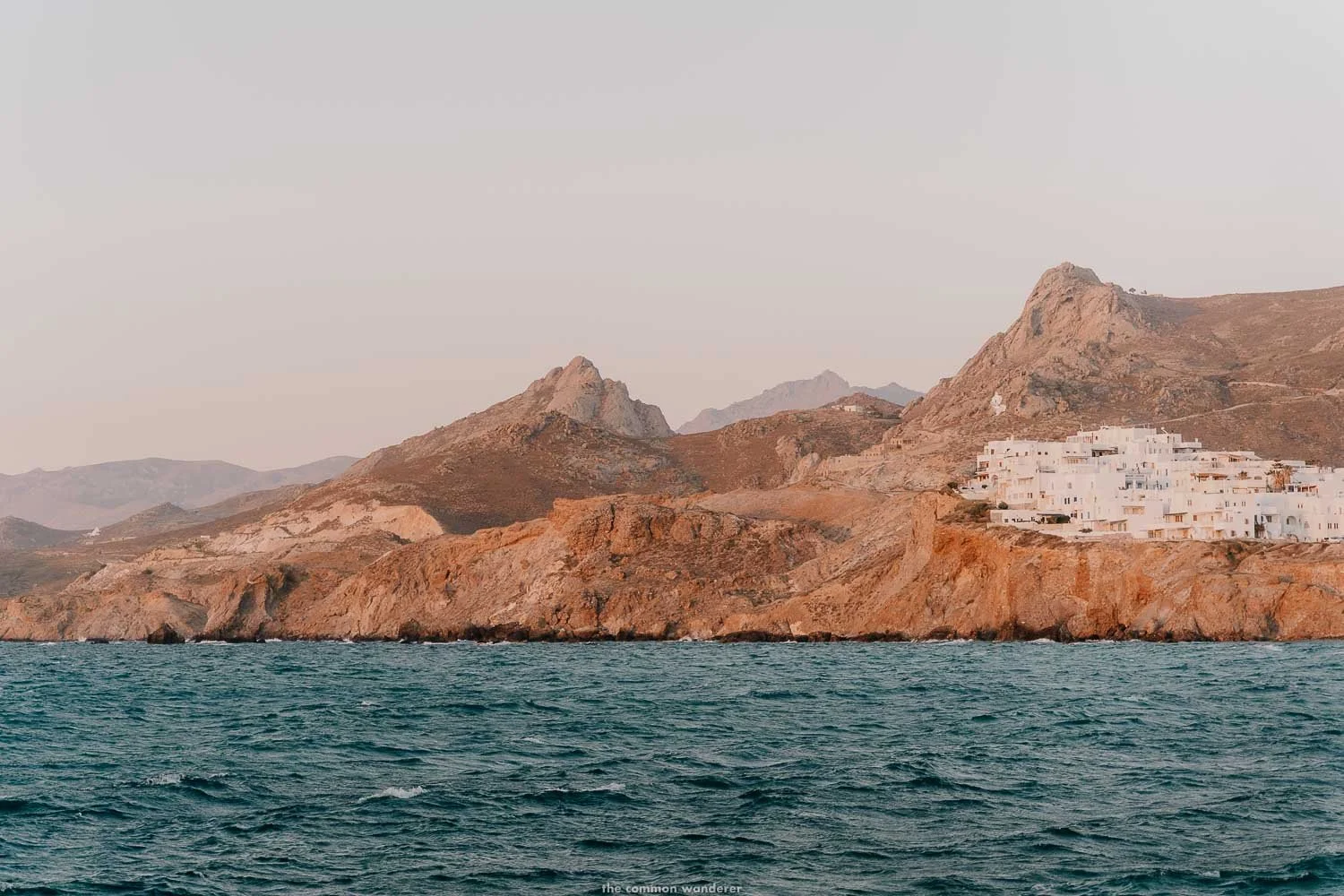
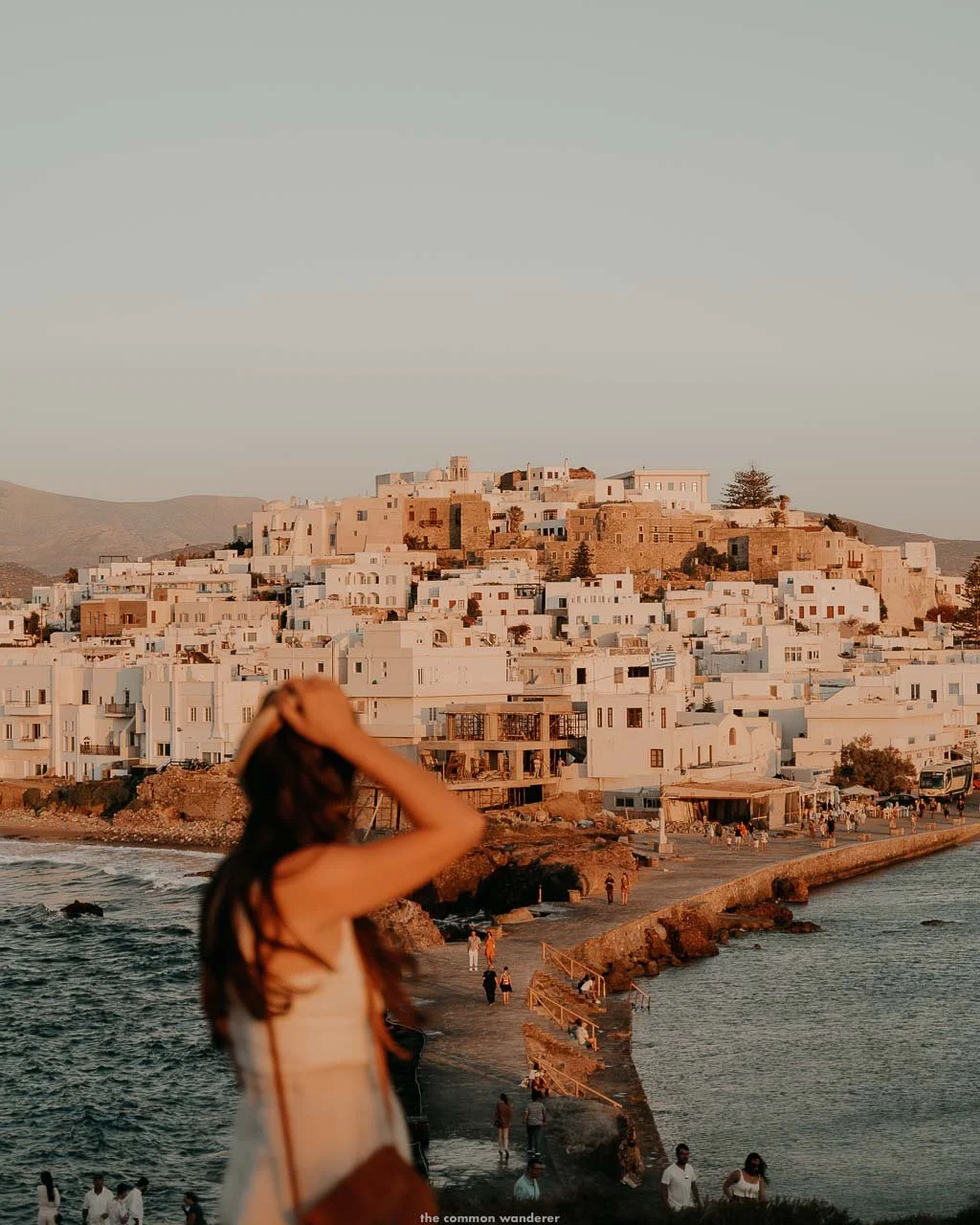
The approach to Naxos by sea, with the Portara Gate visible from the water long before you dock, is one of the great Cycladic arrival moments.
For full details on routes, timings, prices and everything else, our Athens to Naxos guide covers everything.
WHEN IS THE BEST TIME TO VISIT NAXOS?
May and September are the sweet spots, and we'd recommend either without hesitation. Both offer warm sea, manageable crowds and noticeably lower prices than peak season.
May brings the island at its greenest and calmest, before the meltemi winds arrive in force. September brings the warmest water of the year and a relaxed post-summer rhythm that makes everything a little easier and a little cheaper.
July and August are peak season. Naxos handles them better than Santorini or Mykonos by some margin, but accommodation fills up months in advance, traffic on the main roads into Agios Prokopios and Chora can be surprisingly bad, and the meltemi winds peak through both months, which can make the exposed beaches uncomfortable.
Here's the breakdown by period:
MAY
Our personal pick. The island is still green from the winter rains, the sea is swimmable, wildflowers are out across the hillsides and the mountain villages feel genuinely unhurried.
The meltemi hasn't arrived in force yet, which means beaches are calm and days are warm without being punishing. Crowds are thin, prices are lower, and you get a version of Naxos that most visitors never see. Book it if you can.
JUNE
Still excellent in the first half. By mid to late June, the meltemi starts to assert itself, which can make exposed beach days more challenging and some ferry crossings rougher.
The island is noticeably busier than May but nowhere near peak season pressure. Still a great time to visit, but go in knowing that some days the wind will have other ideas.
JULY AND AUGUST
Peak season in every sense: busy, hot, windy and pricier. The meltemi is at its most persistent, accommodation books out months in advance, and traffic on the road into Agios Prokopios can stretch a 20-minute drive into considerably longer.
If summer is your only window, it's still worth it. Just book early, manage expectations and pick your beaches carefully on windy days.
SEPTEMBER INTO EARLY OCTOBER
The most underrated time to visit. Summer crowds thin, the sea reaches its warmest temperatures of the year, and the island settles back into something closer to its natural rhythm.
Restaurants and beach clubs are still fully operating, prices drop meaningfully, and the light turns long and golden across the valleys and hillsides. If May isn't possible, this is your window.
THE SHORT VERSION | May or September. Those are your windows. Everything else is a compromise.
A NOTE ON THE MELTEMI
This strong, dry northerly wind is a feature of the Aegean summer. It provides welcome relief from the heat and creates world-class windsurfing conditions on the island's western coast.
But on strong wind days, the exposed beaches can be unpleasant for those wanting a relaxed beach day. South-facing and sheltered beaches fare considerably better. Worth checking the forecast before committing to a beach in peak summer.
WHAT KIND OF NAXOS TRIP ARE YOU PLANNING?
Naxos means genuinely different things to different travellers, and knowing which version you're after before you arrive shapes everything from where you stay to how you structure your days.
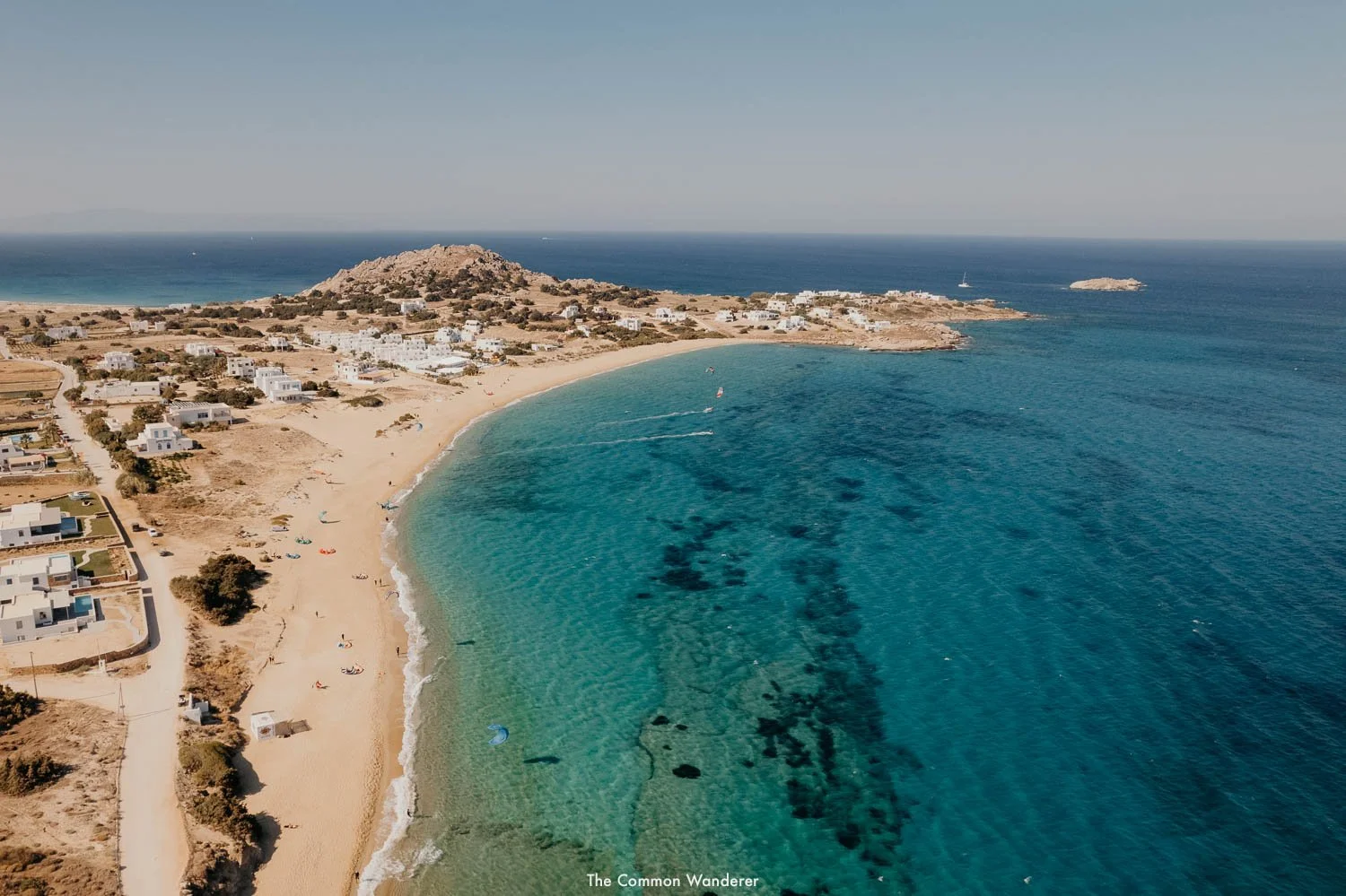
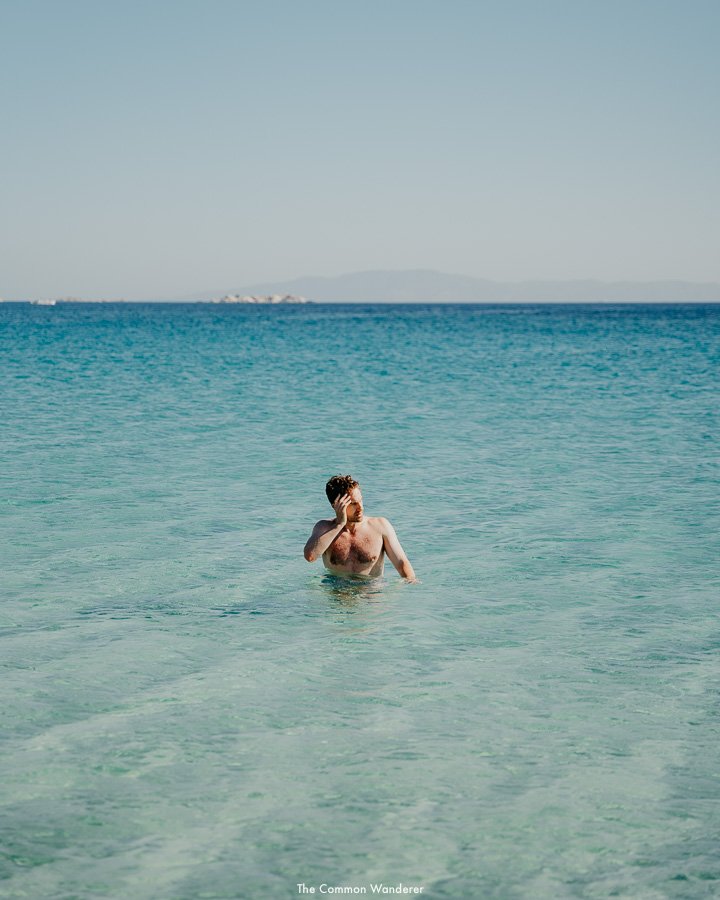
THE BEACH TRIP | Agios Prokopios, Plaka and the western coast are some of the finest beaches in Greece. White sand, turquoise water, good beach clubs and enough space that you're never truly on top of other people.
If a beach-first holiday is what you want, Naxos delivers it completely, and better than most islands in the Cyclades.
THE FOOD AND WINE TRIP | Naxos is the food bowl of the Cyclades, and a trip built around eating and drinking here is a genuinely exceptional week. Naxian Gruyere, local potatoes, fresh seafood, wild rabbit, rooster with pasta, kitron liqueur from the citron tree.
Village tavernas with no menu, just whatever Martina is cooking on the day. This is the version of Naxos we fell for completely.
THE ADVENTURE TRIP | the highest peak in the Cyclades, the best windsurfing conditions in the Aegean, diving on a WW2 plane wreck, hiking through marble villages to Byzantine churches in olive groves.
Naxos is consistently underrated as an adventure destination and consistently delivers.
THE CULTURE AND HISTORY TRIP | Zeus was raised here. Theseus passed through. The unfinished kouroi lie in the olive groves outside Melanes. The marble-paved streets of Apeiranthos have changed almost nothing in centuries.
For those who want depth alongside beauty, Naxos offers more than almost any other Cycladic island.
THE SLOW TRAVEL TRIP | base yourself in Chora or a village, hire a car for a few days, eat well, swim every day, watch sunsets from Mt Zas. Do very little with great intention. This is the trip Naxos was made for.
Whichever version you're after, our Things to Do guide and Where to Stay guide will help you build it.
HOW LONG SHOULD YOU SPEND ON NAXOS?
Honestly, a month wasn't enough, but we appreciate that it's not a realistic benchmark for most visitors.
Here's a more practical breakdown:
3 NIGHTS | Enough to see Chora, one or two beaches and a quick drive through the countryside. You'll leave feeling like you've seen the surface and not much more. Fine if Naxos is a stop on a broader island-hopping trip, but don't expect to feel like you know the island.
5 NIGHTS | The minimum we'd recommend for a first visit. Enough to do Chora properly, spend real time on the western beaches, get into the mountain villages and fit in a sailing trip or a hike up Mt Zas.
7 NIGHTS | This is the sweet spot. A full week lets you slow down, hire a car for a few days and cover the island properly. The villages, the remote beaches, the wineries, the coastline you'd otherwise miss entirely. This is what we'd recommend to anyone who asks.
TWO WEEKS OR MORE | The island is big enough and varied enough to fill two weeks without repetition, and the slower pace of life here rewards those who stay long enough to fall into it.
Naxos is also considerably more affordable than Santorini or Mykonos, so staying longer here stretches your budget further than almost anywhere else in the Cyclades. More on that below.
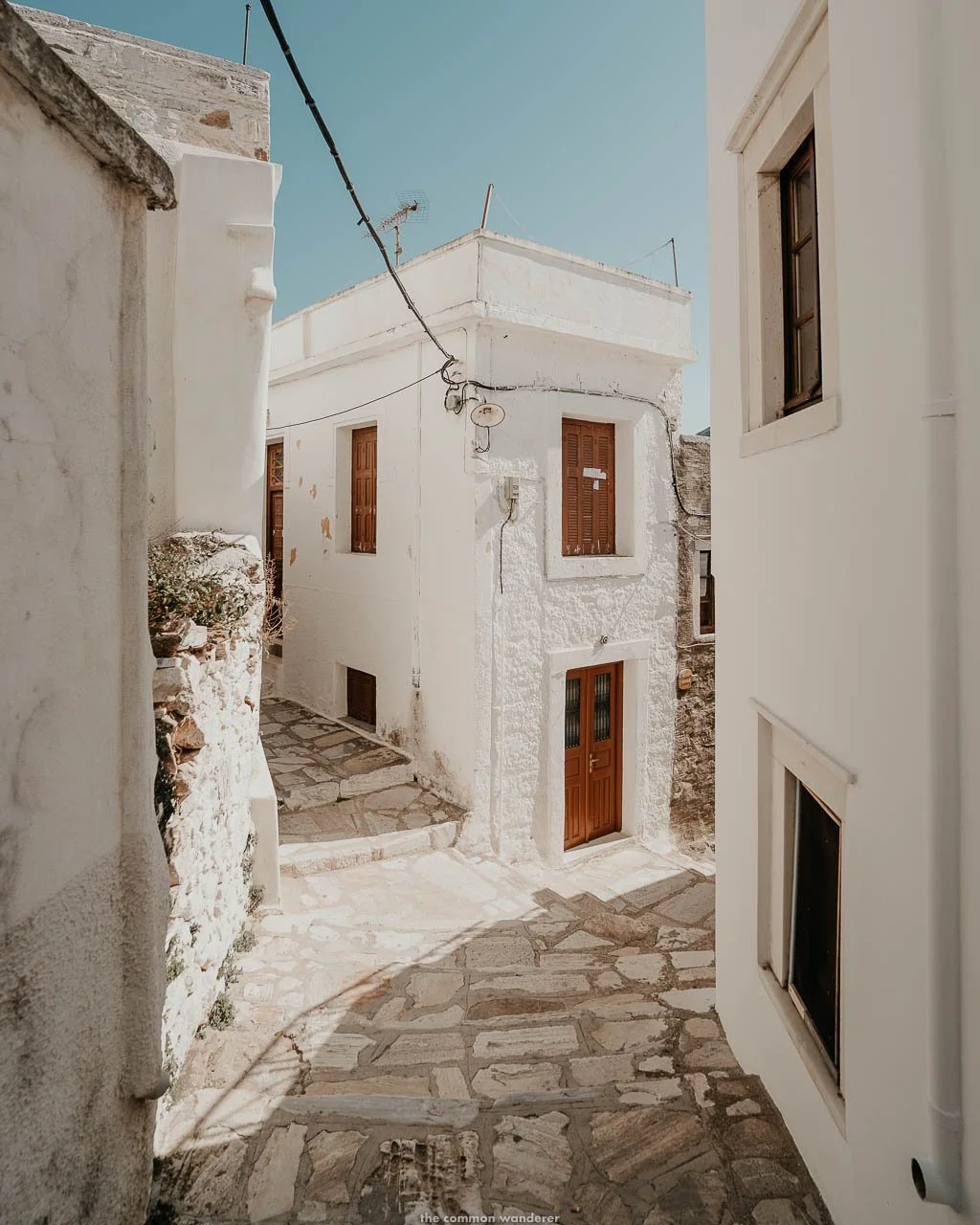
HERE'S WHAT TO SEE AND DO ON NAXOS
Naxos punches well above its size, and considerably above its reputation.
In a single day, you might explore ancient Byzantine ruins, wander marble-paved mountain villages, windsurf in the Aegean, swim on some of the finest beaches in Greece and eat the best meal of your Greek trip. The island is that varied, and that rewarding.
The short version: base yourself in Chora or along the western beach strip, spend at least a day driving the mountain villages, get to the beaches early and don't leave without hiking Mt Zas at sunset - that’s one for the memory bank.
For the full breakdown of every experience worth having on the island, our Things to Do on Naxos guide covers everything in detail.
THE BEST BEACHES IN NAXOS ARE EXTRAORDINARY
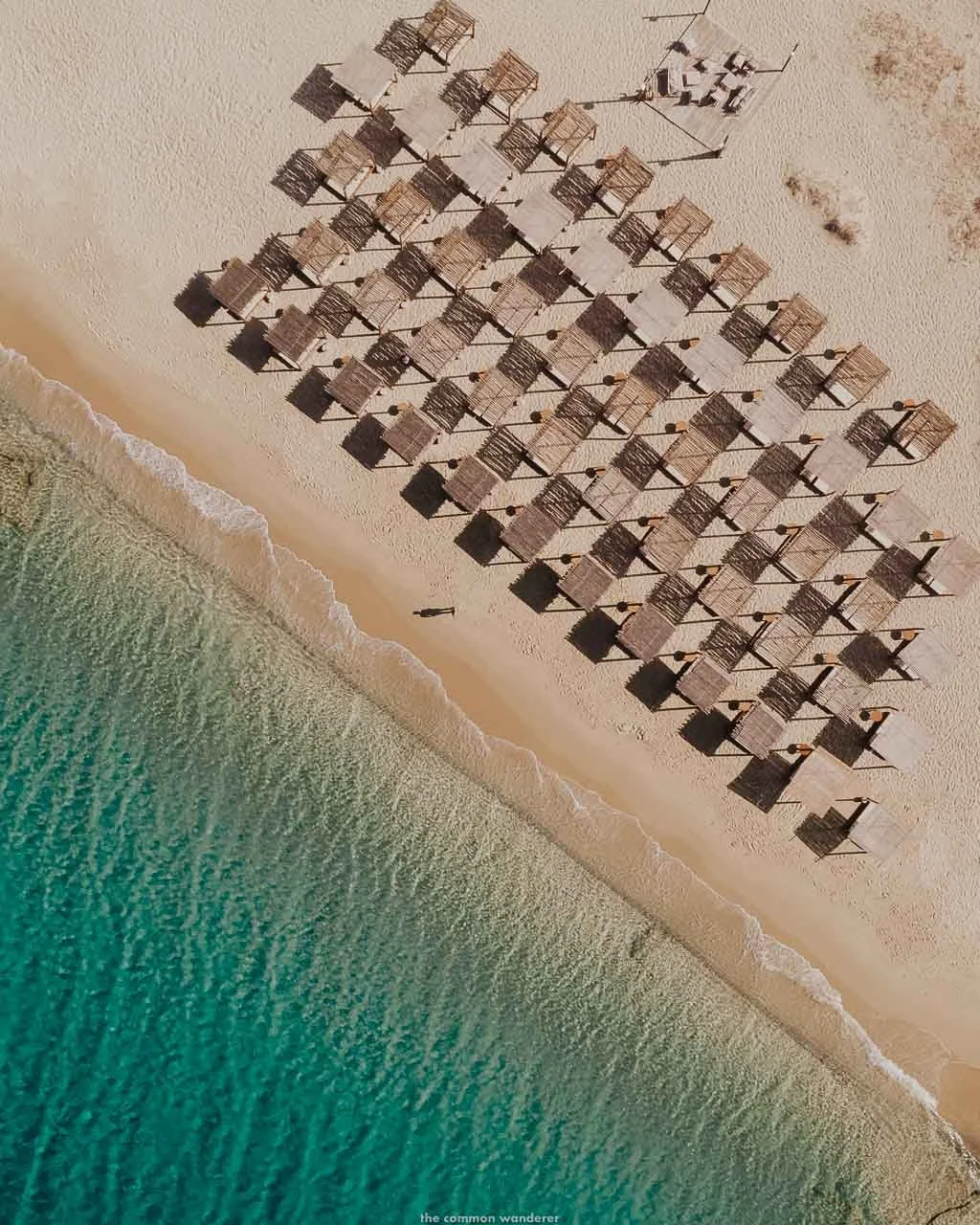
The southwestern coast of Naxos is home to some of the finest beaches in Greece. We say that as two Australians, and having spent a lot of time looking, it still feels like an understatement.
What makes Naxos particularly compelling is the variety. The developed beach strip from Agios Georgios through Agios Prokopios, Agia Anna and Plaka offers something for every traveller: beach clubs, watersports, tavernas and long stretches of golden sand.
Further south and east, the beaches become progressively wilder and more remote - Hawaii Beach, backed by burnt orange cliffs in a cedar forest, and the untouched coves of the southeast feel like Greece of yesteryear.
Our personal highlights, though, are Plaka for its endless white sand and the best beach club on the island at Tortuga. And Hawaii Beach for its raw, remote beauty.
For the full breakdown of every beach worth visiting, our Naxos beaches guide has everything you need.
THE MOUNTAIN VILLAGES ARE THE SOUL OF THE ISLAND
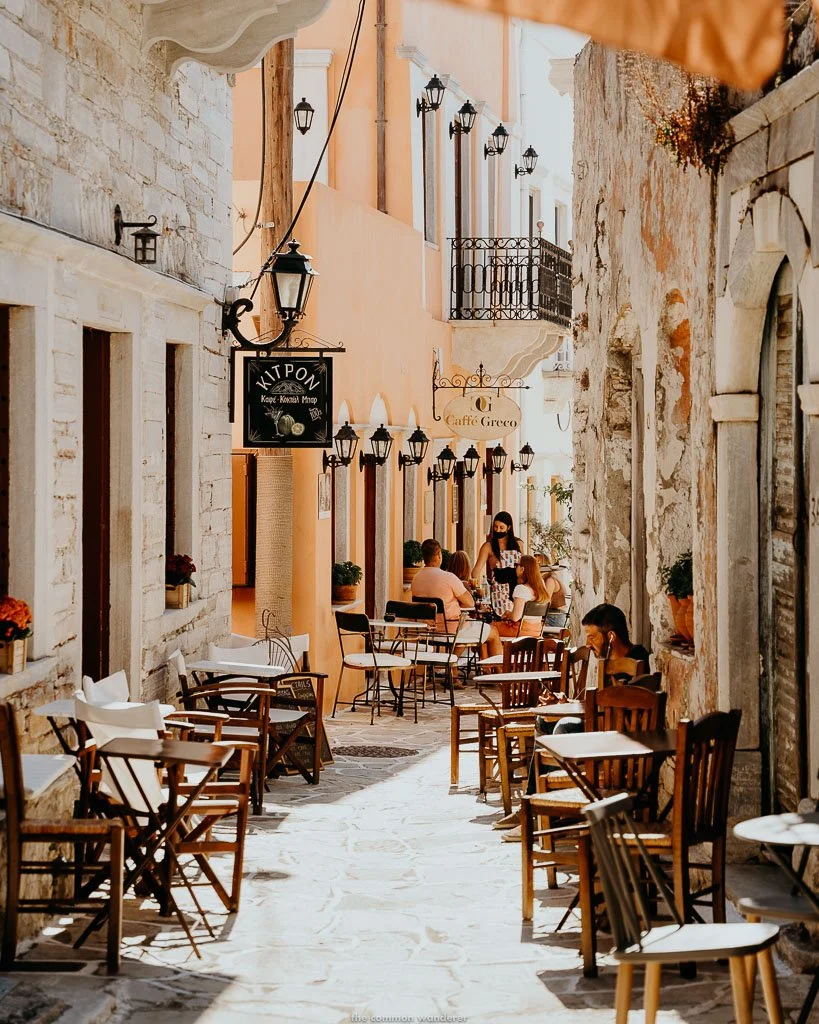
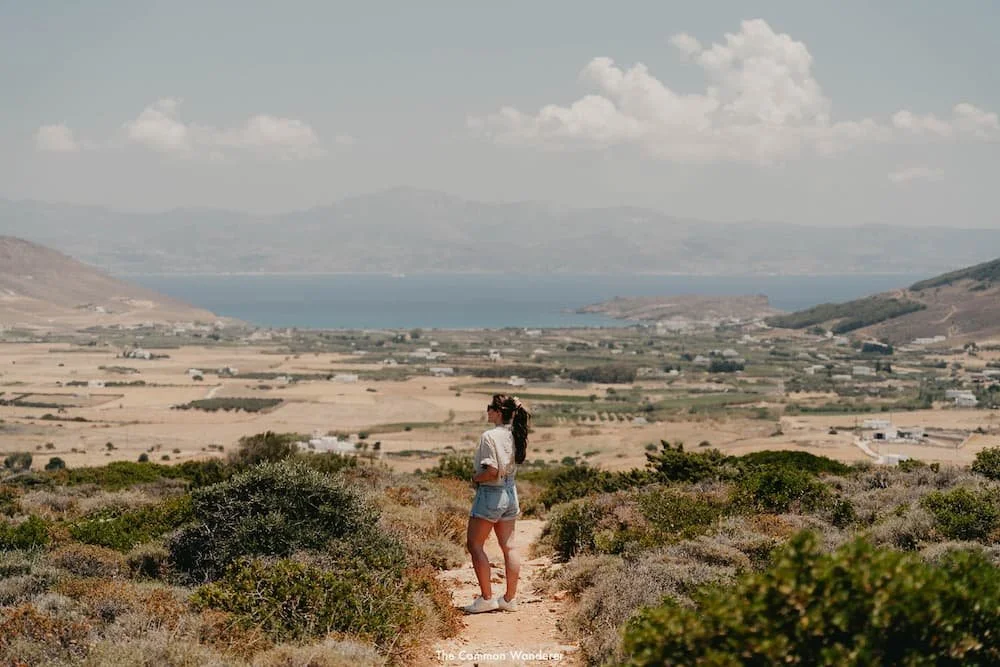
The beaches get the attention, but the mountain villages are where Naxos shows its true soul. Never did we feel the real Greece more than in these villages, and they're simply a must-visit.
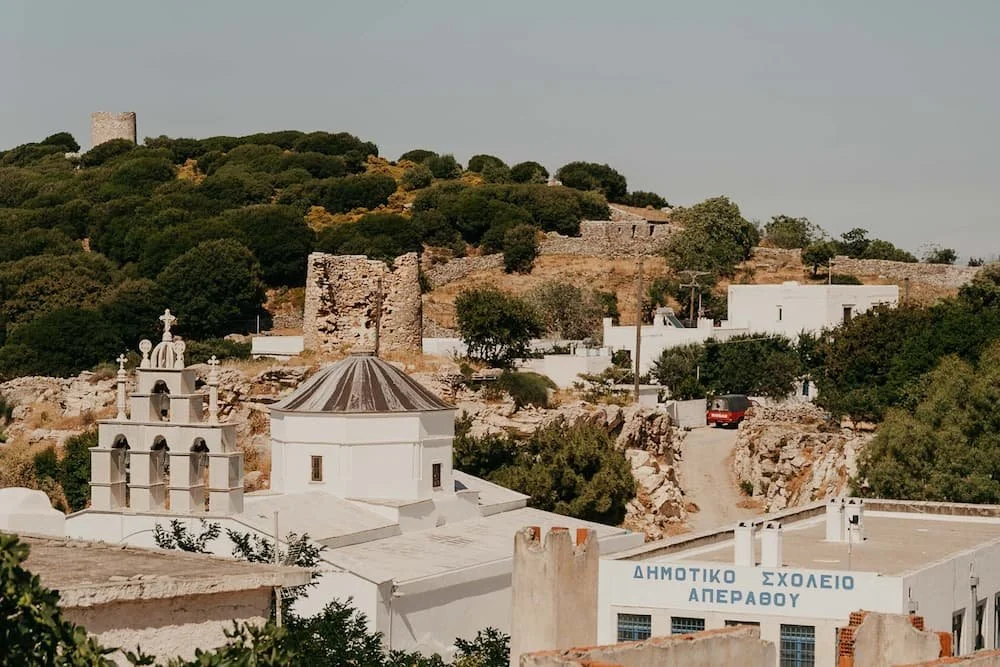
Halki is the most immediately beautiful - a Venetian-era village nestled among citrus and olive groves, with a famous kitron distillery, ceramic studios and a shaded main square that’s perfect for a long lunch.
Apeiranthos is the most extraordinary - a marble-paved village that still bears the hallmarks of the Venetian era, where mules deliver goods to elderly residents living high in the village.
Filoti is the most local - the first village we passed in the Cyclades that felt entirely unperformed for tourists. Locals mill around bar tables on the leafy main street, farm trucks roll past stacked with Naxian potatoes.
Koronas was, quietly, our favourite of all. Sleepier, more local and almost entirely unaccustomed to visitor attention. Sit in the church square or at Martina and Stavros' Taverna, and you'll understand why.
For the full guide to every village worth visiting, our Things to Do guide covers each one in detail.
NAXIAN CUISINE IS AMONG THE BEST IN GREECE
Drive outside of Chora for ten minutes in any direction and one thing becomes immediately clear: Naxos is blessed with extraordinarily fertile land.
Small-scale organic farms, olive orchards, citrus groves, vineyards and grazing land in every direction. Natural springs and mineral-rich soil give local farmers a yield that most Cycladic islands can only envy.
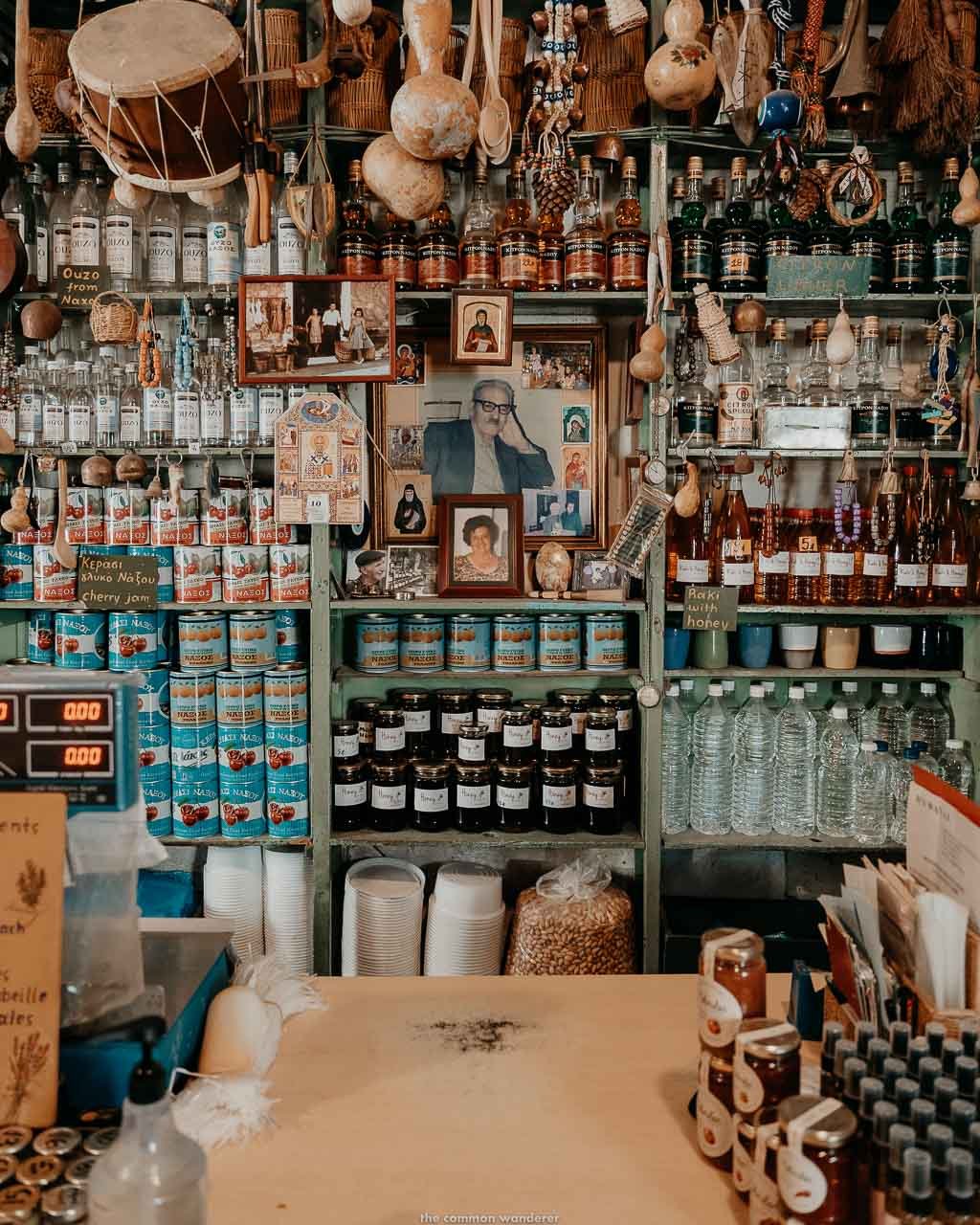
The result is a food culture that is, in our genuine opinion, the best in the Cyclades. We've eaten well across Greece, and nothing matched what we found consistently on Naxos, from the humblest village taverna to the more refined restaurants in Chora.
What sets Naxian food apart isn't technique or presentation. It's the quality of the raw ingredients. The cheese is exceptional. The potatoes are legendary. The olive oil is unmatched.
The wine, made from grapes grown on the island's fertile slopes, is consistently excellent and consistently underpriced.
A FEW THINGS WORTH EATING (& DRINKING)
NAXIAN POTATOES | The island's most famous export. Waxy, flavoursome and unlike any potato you've had elsewhere.
NAXIAN CHEESES | Gruyere, Xinomyzithra and Arseniko. The real highlight of Naxian produce and the best reason to visit the cheese shops in Chora.
NAXIAN GRAVIERA SAGANAKI | Pan-fried Gruyere with honey and sesame seeds. Order it everywhere.
PATOUDO | Lamb stuffed with chard, fennel, herbs and garlic, slow-cooked until it falls apart. One of the most distinctively Naxian dishes.
KITRON | the local liqueur made from citron tree leaves, produced nowhere else in the world. Try all three varieties: green, yellow and clear.
For the full guide to where to eat, which tavernas to seek out and the specific restaurants worth booking, our Things to Do guide and Naxos Chora guide cover everything in detail.

IS NAXOS EXPENSIVE?
Compared to Santorini and Mykonos, Naxos is genuinely affordable. Compared to Paros, it's roughly equivalent, perhaps marginally cheaper.
The honest picture:
ACCOMMODATION | Varies considerably by location and season. A decent mid-range hotel or apartment in Chora or along the beach strip runs €80-150 per night in shoulder season, climbing to €200 or more in peak summer for the better properties. Luxury options like Naxian Collection sit well above that. Self-catering apartments are the best value option and widely available, especially in Agia Anna and Agios Prokopios.
FOOD | Where Naxos delivers. A full meal at a village taverna with wine runs €25-40 per person. In Chora, expect slightly more. The mountain villages, particularly Filoti, Apeiranthos and Koronas, offer exceptional food at prices that feel almost old-fashioned by Cycladic standards.
BEACHES | Mostly free, with sunbed hire at the more developed stretches running €15-25 per set. The remote beaches to the south and east have no facilities at all.
GETTING AROUND | Where costs can add up. Car hire runs €25-50 per day, depending on season and vehicle.
Budget around €150-200 per day for a couple in shoulder season, covering accommodation, food, transport and a beach club stop or two.
The single best way to keep costs down: travel in May or September, self-cater breakfasts and lunches, eat dinner at village tavernas rather than the beach strip, and hire a car for specific days rather than the full trip.
GETTING AROUND NAXOS
Naxos is the largest island in the Cyclades - considerably bigger than Paros, Mykonos or Santorini - and that size matters when it comes to getting around.
The best beaches, the mountain villages and the remote corners of the island are spread across a landscape that rewards those with their own wheels considerably more than those without.
BY CAR
Our strong recommendation is for anyone spending more than three nights.
A rental car transforms what you can see and do on Naxos, from the remote beaches to the south, the mountain villages inland, and the drive around the circumference of the island, which was one of our favourite days on Naxos.
Car rental is affordable by Cycladic standards, particularly in the shoulder season, from around €25-50 per day.
BOOK | Search car rental on Naxos via Discover Cars
BY BUS
Naxos has a surprisingly good and reliable bus network run by KTEL, centred on Chora. The main beach bus runs every 15-30 minutes in high season to Agios Prokopios, Agia Anna and Plaka. Inland routes serve Halki, Filoti, Apeiranthos and Koronas, though less frequently - typically 3-5 departures per day in summer.
Current 2026 fares from Chora: Agios Prokopios and Plaka €2.10, Filoti €3.20, Apeiranthos €4.10, Koronas €4.90, Apollonas €7.10. Buy tickets before boarding at the KTEL office on the harbour front, right next to where the ferry docks.
In peak season, arrive at the bus stop early - the buses fill up fast (it can be a real fight getting on), and standing room only is common on the beach routes.
BY SCOOTER OR ATV
A good middle ground between the bus and a full car rental for those wanting more flexibility on a tighter budget.
Fine for the main coastal roads and the closer villages. We wouldn't recommend a scooter for the mountain roads or longer drives around the island, given the terrain and duration.
For a full breakdown of every transport option - including current bus timetables, car rental recommendations and practical tips - our dedicated getting around Naxos guide covers everything in detail.


WHERE TO STAY ON NAXOS
Our recommendation for most visitors: base yourself in Chora for the first few days and move to Plaka or Agios Prokopios if the beach is calling.
Chora puts you within easy reach of the mountain villages and has the best restaurants and nightlife on the island. The beach strip puts the southwestern coast on your doorstep with good bus connections into town.
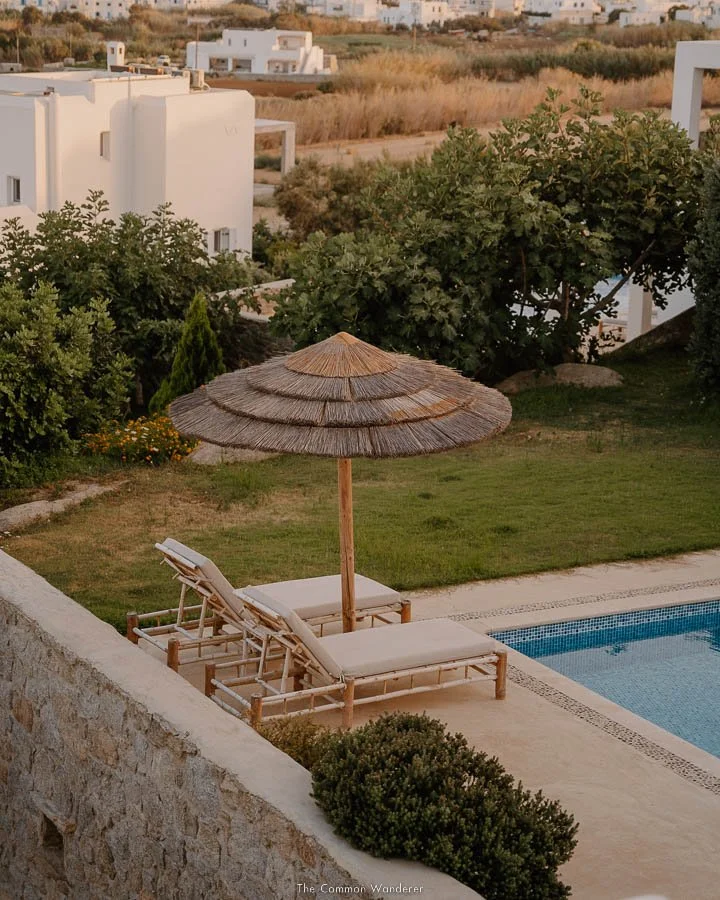
We stayed at Flisvos in Agios Prokopios, at properties along Plaka Beach and Agios Prokopios and at the Naxian Collection - and all three offered genuinely different but equally rewarding experiences.
For the full breakdown of every area and every budget, our Where to Stay on Naxos guide covers everything in detail.
A FEW PRACTICAL THINGS WORTH KNOWING
WATER | Naxos is more water-rich than most Cycladic islands thanks to natural springs in the mountain villages. Tap water is generally drinkable, particularly inland, though the mineral content can be high. We'd recommend a water filtration bottle rather than buying single-use plastic. Plastic pollution is a problem on the island's beaches.
TOILET PAPER | Don't flush it. This applies across Greece and especially on the islands, where the sewerage pipes are narrow and clog easily. Use the bins provided in every bathroom. It takes some getting used to. Do it anyway.
SIESTA | Between roughly 2 pm and 5 pm, particularly in the mountain villages, businesses close and life slows down considerably. Plan accordingly or you'll find tavernas shut and villages empty at exactly the point you arrive.
CURRENCY | Euro throughout. ATMs are available in Chora and the main beach towns. Carry cash for buses, smaller tavernas and village shops.
SIM CARD | Pick one up in Athens or Chora. The network is mostly 4G, but speeds slow in peak season with the influx of visitors.
TRAVEL RESPONSIBLY ON NAXOS
Naxos is a special place, feeling real pressure from overtourism and plastic pollution, both of which we witnessed firsthand during our time on the island.
A few things that make a real difference: travel in May or September when your visit supports local businesses without adding to peak-season strain. Bring a reusable water bottle.
Eat at locally owned tavernas and buy from local producers. If you see rubbish on a beach, pick it up.
It's not complicated. It's just travelling with a little more care.
READ MORE | Our complete guide to responsible travel
TRAVEL INSURANCE | STAY SAFE IN GREECE
Honest take: if something goes wrong, a medical emergency, a missed ferry, a scooter accident on a coastal road, travel insurance is the difference between a stressful story and a catastrophic one.
After 10+ years of full-time travel, here's what we use:
WORLD NOMADS | Offers travel insurance for independent travellers and intrepid families. Their policies offer coverage for more than 150 activities as well as emergency medical, lost luggage, trip cancellation and more.
GET A QUOTE | World Nomads
PLANNING A TRIP TO GREECE SOON?
Make the most of your time on Naxos with our essential Greece travel guides.
EXPLORE NAXOS
WHERE TO STAY ON NAXOS
Where to Stay on Naxos Island — hotels, villas and apartments across every budget and neighbourhood
MORE CYCLADES
DISCOVER THE BEAUTY OF GREECE WITH OUR GUIDES




If you choose to purchase using these links, we receive a small commission at no extra cost to you. Please know that by using these affiliate links, you're directly supporting The Common Wanderer to stay wandering, the running costs of the site, and our ability to provide you with free content to help you on your travels.
That, and you're officially a legend.

From what to see and do, through to the best restaurants and bars to enjoy your evenings, our Naoussa guide has everything you’re looking for.