

Our guide on how to get to the Dolomites includes all the essential information you need to plan and enjoy a hassle-free holiday in one of Europe’s most breathtaking regions.
UPDATED JULY 2026
Getting to the Dolomites takes a bit of planning.
Not because it's difficult, but because the region is bigger and more complex than most visitors expect.
The Dolomites span three Italian provinces, South Tyrol, Trentino and Belluno, and don't have their own airport. The nearest gateways are Venice, Verona, Milan, Munich and Innsbruck, all of which are between two and four hours from the mountains by car depending on where in the Dolomites you're headed.
That distance matters more than it sounds when you factor in mountain roads, altitude changes and the fact that the places you actually want to be, the lakes, the passes, the trailheads, are often another hour beyond the nearest town.
We drove in from Venice on our first trip. It took around two and a half hours to reach our base in the Pusteria Valley, and the drive through the foothills and into the mountains was one of the better parts of the trip.
That experience shaped everything that followed about how we understand the Dolomites: this is a place that rewards the freedom of having a car, building in time and not rushing.
This guide covers every option for getting to the Dolomites and getting around once you're there, with confirmed 2026 prices and practical tips based on our time in the region.

HOW TO GET TO THE DOLOMITES
BEST GATEWAY AIRPORTS | Venice Marco Polo (VCE), Verona Villafranca (VRN), Milan Malpensa (MXP), Munich (MUC), Innsbruck (INN)
RECOMMENDED OPTION | Fly to Venice or Verona, pick up a rental car and drive. Most practical and flexible for exploring the region.
CAR RENTAL | The easiest way to access the Dolomites. Discover Cars - book in advance, particularly for peak summer season
BY BUS FROM VENICE | Cortina Express from Venice Mestre to Cortina d'Ampezzo, around €29-32 per person, 2h 10m to 2h 30m. then Cortina Express from Venice to Cortina
BY TRAIN | Trenitalia to Bolzano (from Milan, Verona or Innsbruck) or to Dobbiaco/Toblach (from Innsbruck via Austria). Book here
PRIVATE TRANSFER | Available from all major airports and cities. Book in advance via GetYourGuide
THE BEST WAY TO GET TO THE DOLOMITES
WHERE ARE THE DOLOMITES?
The Dolomites are a mountain region in northern Italy that spans across the provinces of Südtirol (South Tyrol), Trentino, and Belluno.
The capital of the area is the beautiful city of Bolzano (Bozen), however, the main cities and towns include Trento, Bressanone (Brixen), Cortina d'Ampezzo and Brunico (Bruneck).
WHERE TO BASE YOURSELF IN THE DOLOMITES
Before deciding how to get to the Dolomites, it helps to know where you want to stay and what you most want to see.
The Dolomites span three Italian provinces and the main towns, hikes, lakes and mountain passes are spread across several distinct valleys.
Distances can look short on a map, but mountain roads, passes and photo stops add time quickly. Your best arrival airport depends heavily on your base.
CORTINA D'AMPEZZO | Best for Tre Cime di Lavaredo, Lago di Sorapis, Lago di Misurina, Cadini di Misurina, Cinque Torri and Croda da Lago. Best gateway: Venice.
ALTA PUSTERIA AND THREE PEAKS | Best for Lago di Braies, Tre Cime di Lavaredo, Lago di Dobbiaco, San Candido and Kronplatz. Best gateway: Venice or Innsbruck.
VAL GARDENA AND ORTISEI | Best for Alpe di Siusi, Seceda, Passo Gardena, Gran Cir and the Sella Massif. Best gateway: Verona, Munich or Innsbruck.
ALTA BADIA | Best for Passo Gardena, Gran Cir, Piz Sorega and quieter mountain stays. Best gateway: Verona or Innsbruck.
BOLZANO AND SURROUNDS | Best for Lago di Carezza, Val di Funes, the South Tyrol wine road and western Dolomites access. Best gateway: Verona or Munich.
MERANO | Best for spa stays, the Texel Nature Park and a slower pace with good transport links. Best gateway: Verona, Milan or Munich.
If you're visiting for more than a few days, we'd recommend choosing two or three bases rather than trying to cover the whole region from one town.
For the full breakdown, our Where to Stay in the Dolomites guide and Things to Do in the Dolomites cover everything in detail.
FLYING TO THE DOLOMITES
Flying is the most common way for international travellers to arrive to the Dolomites, and the right choice of airport makes a significant difference to both your journey time and your options once you land.
There is no airport in the Dolomites itself - as we said above, it encompasses a large alpine region with limited land for an airport.
The nearest gateways are all between two and four hours from the mountains by car, depending on where in the region you're heading.
We've personally flown into both Venice and Munich, and both are easy options to get to the Dolomites.
WHICH AIRPORT SHOULD YOU CHOOSE?
For the eastern Dolomites (Cortina, Tre Cime, Lago di Braies, Lago di Sorapis): Venice is the closest and most practical gateway.
For the South Tyrolean Dolomites (Bolzano, Val Gardena, Alpe di Siusi, Lago di Carezza): Verona, Munich or Innsbruck all give faster road access than Venice.
For long-haul travellers from Australia, North America or Asia: Milan Malpensa often has the best direct connections. Build in a Milan night before driving north.
For the northern Dolomites (Pusteria Valley, San Candido, Dobbiaco): Innsbruck is the fastest gateway and often overlooked.
When in doubt, choose the airport with the best flight from your origin, then budget for the drive time accordingly.
We suggest flying to Venice as the best way to get to the Dolomites. We've outlined the options for flying to the Dolomites below, including driving time to both Bolzano and Cortina d'Ampezzo, the two main gateways to the region:
Here's how each one compares.
VENICE MARCO POLO AIRPORT (VCE): OUR RECOMMENDATION FOR MOST VISITORS
The most popular gateway to the Dolomites and our first choice for most visitors, particularly those heading to the eastern Dolomites: Cortina d'Ampezzo, Lago di Braies, Tre Cime di Lavaredo and Lago di Sorapis.
Venice Airport sits on the edge of the lagoon and is well-connected to North America, the UK, Australia, the Middle East and across Europe.
DRIVING TIMES FROM VENICE AIRPORT
Cortina d'Ampezzo: around 2 hours via A27 motorway north
Bolzano (South Tyrol): around 2.5 to 3 hours
San Candido/Pusteria Valley: around 2.5 hours
BY CAR | Our strong recommendation. Car rental desks are in the arrivals hall. Book well in advance for July and August when both availability and prices are significantly affected by peak demand.
BOOK | Car rental from Venice Airport
BY CORTINA EXPRESS BUS | A direct bus service from Venice Mestre bus station (connected to the airport by the ATVO shuttle) to Cortina d'Ampezzo. Journey time around 2 hours 10 minutes to 2 hours 30 minutes.
Cost approximately €29-32 per person each way. Multiple daily departures.
BOOK | Cortina Express
BY PRIVATE TRANSFER | Door-to-door service from the airport to your accommodation. Around 1 hour 40 minutes to Cortina. Our recommendation for families, groups or those arriving late.
VERONA VILLAFRANCA AIRPORT (VRN): BEST FOR WESTERN DOLOMITES AND BUDGET TRAVELLERS
A smaller airport with fewer international connections than Venice, but well-served by budget airlines including Ryanair and Wizz Air from across the UK and Europe.
The best gateway if you're heading to the western Dolomites, Val Gardena or Alpe di Siusi.
DRIVING TIMES FROM VERONA AIRPORT
Bolzano: around 1 hour 30 minutes via A22 motorway north
Val Gardena/Ortisei: around 2 hours 15 minutes
Cortina d'Ampezzo: around 3 hours
BY CAR | The most practical option. Car rental is available at the airport. The drive north to Bolzano on the A22 is straightforward and well-signposted.
BOOK | Car rental from Verona Airport
BY BUS AND TRAIN | An airport bus connects Verona Airport to Verona Porta Nuova railway station. From there, direct trains run north to Bolzano in around 1 hour 30 minutes. Book train travel here
BY PRIVATE TRANSFER | Available from Verona Airport to any Dolomites destination.
MILAN MALPENSA AIRPORT (MXP): BEST FOR LONG-HAUL CONNECTIONS
The largest airport option and the best choice for long-haul flights from Australia, North America and Asia, where direct Venice connections may be limited.
From Milan Malpensa, the drive to the Dolomites is long but manageable if you break the journey.
DRIVING TIMES FROM MILAN MALPENSA
Bolzano: around 3 to 3.5 hours via A4 and A22 motorways
Cortina d'Ampezzo: around 4 hours
Val Gardena: around 4 hours 30 minutes
BY CAR | Our recommendation. The A4 east from Milan connects directly to the A22 north to Bolzano. Toll charges apply on both motorways.
BOOK | Car rental from Milan Malpensa
BY TRAIN | Take the Malpensa Express to Milano Centrale or Milano Porta Garibaldi, then board a train toward Verona and Bolzano.
The full journey from Malpensa to Bolzano takes around 4.5 to 5.5 hours including transfers.
BOOK | Book your Italian train travel here
BY PRIVATE TRANSFER | Available from Milan but long journey times make this expensive for solo travellers. Better value for groups of three or more.
OUR HONEST TAKE ON MILAN | If you fly into Malpensa, we'd recommend spending a night in Milan before driving into the mountains the following morning.
The full journey from Malpensa to the Dolomites is a long day, particularly after a long-haul flight.
MUNICH AIRPORT (MUC): BEST FOR NORTHERN EUROPE CONNECTIONS AND NORTHERN DOLOMITES
An excellent option for travellers from northern Europe or those connecting through Germany.
Munich Airport is around 2.5 to 3 hours from Bolzano via the A8 motorway to Innsbruck and then the A22 south through the Brenner Pass, one of the most historically significant alpine crossings in Europe.
DRIVING TIMES FROM MUNICH AIRPORT
Bolzano: around 2.5 to 3 hours via A8, A12 and A22
San Candido/Pusteria Valley: around 2.5 hours via A8 and B179
Cortina d'Ampezzo: around 3.5 hours
BY CAR | Our recommendation from Munich. The drive through Innsbruck and over the Brenner Pass is spectacular and well-signed. Note that driving through Austria requires an Austrian motorway vignette.
The vignette can be purchased at the Austrian border or online in advance. Check current rates at asfinag.at before travelling.
BY TRAIN | Train from Munich Hauptbahnhof to Innsbruck, then onward to Bolzano via the Brenner railway. Multiple daily connections.
The journey takes around 3.5 to 4 hours total.
BOOK | Book your European train travel here
BY PRIVATE TRANSFER | Available from Munich Airport to the Dolomites.
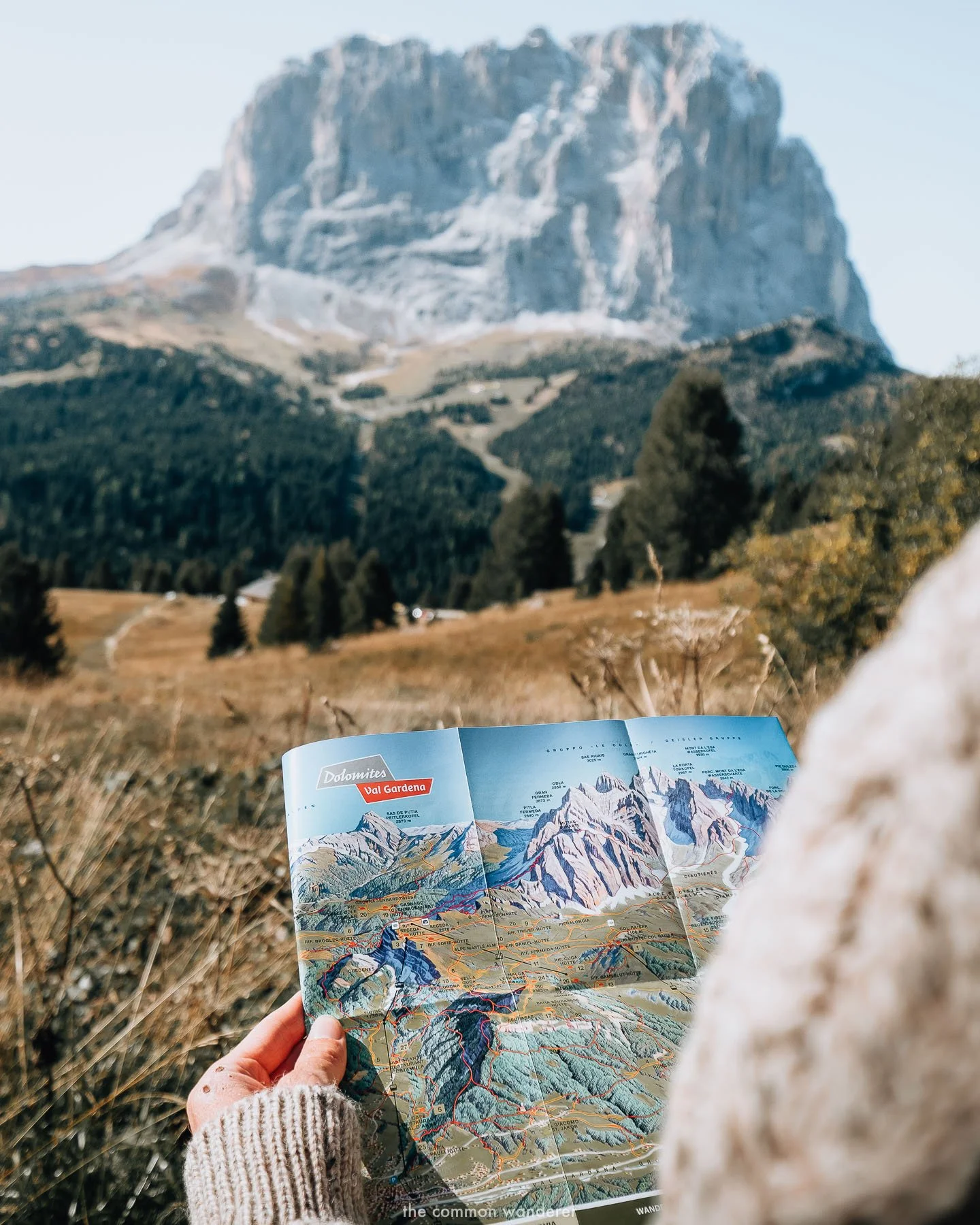
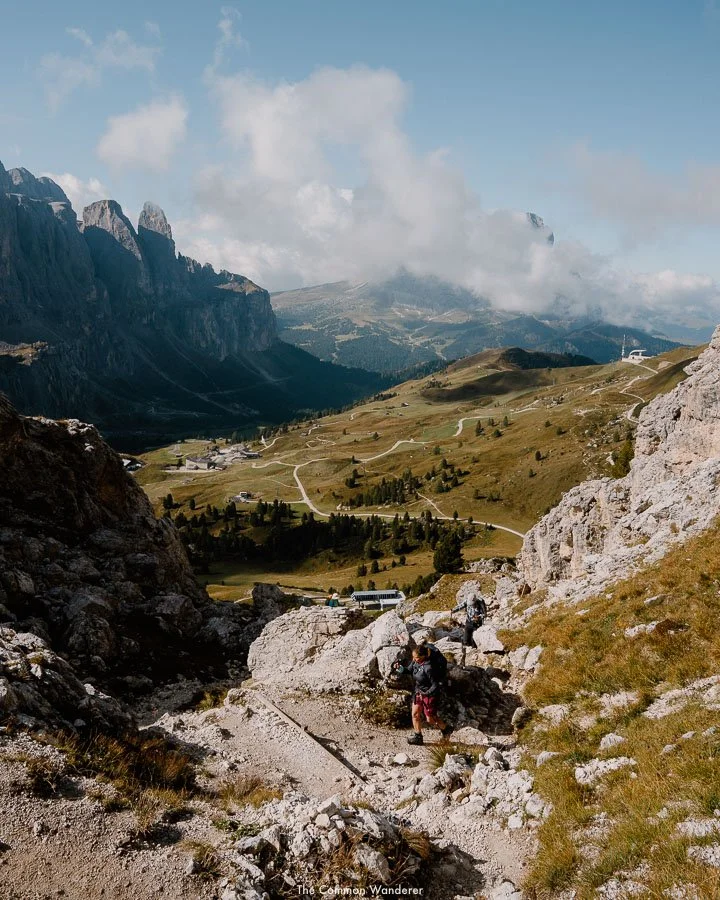
GETTING TO THE DOLOMITES BY CAR
Driving is, without question, the best way to explore the Dolomites. Not just to get there, but to actually experience the region properly once you arrive.
The lakes, the passes, the trailheads, the rifugios and the villages that make this part of Italy extraordinary are scattered across three provinces and are much harder to visit without your own wheels.
A car gives you the freedom to arrive at Lago di Braies before sunrise, to pull over on the Passo Giau when the light is at its best, and to reach the trailhead for Tre Cime at 6am before the car parks fill.
We driven in from Bolzano and Budapest, and the journey through the foothills into the mountains was one of the better parts of the whole experience.
Those drives shaped how we understand the Dolomites, and we firmly believe that this is a place that rewards having a car.
Car rental prices in the Dolomites vary significantly by season, vehicle type and booking lead time. July and August see the highest demand and prices.
We suggest visiting in shoulder season, when car rental is inherently cheaper. Regardless, book as early as possible, particularly for peak summer.
DRIVING DISTANCES AND TIMES TO THE DOLOMITES
All times are approximate and assume normal traffic conditions. Mountain roads add time compared to motorway estimates.
Venice Airport to Cortina d'Ampezzo: around 2 hours via A27 north
Venice Airport to Bolzano: around 2.5 to 3 hours via A4 and A22
Verona to Bolzano: around 1 hour 30 minutes via A22
Milan Malpensa to Bolzano: around 3 to 3.5 hours via A4 and A22
Munich Airport to Bolzano: around 2.5 to 3 hours via A8, A12 and A22
Innsbruck to Bolzano: around 1 hour 30 minutes via A22
Innsbruck to San Candido: around 1 hour 30 minutes via B179
THINGS TO KNOW BEFORE DRIVING IN THE DOLOMITES
Driving through the Dolomites is simultaneously glorious and challenging, with a mix of environmental and driving conditions, rules, and regulations impacting how you approach the driving itself.
Below are a few things we think are important to consider before driving here:
MOUNTAIN ROADS | The Dolomites are famous for their dramatic mountain passes, including the Passo Giau, Passo Falzarego, Passo Gardena and Passo Sella. These roads are spectacular and entirely driveable in a standard car, but they are steep, narrow in places and have significant hairpin bends. Take them slowly, particularly if mountain driving is new to you.
ZTL ZONES | Many Dolomites villages have Limited Traffic Zones (Zona Traffico Limitato), which restrict access during certain hours for non-residents. Driving into a ZTL without a permit will generate an automatic fine via camera.
The main affected areas include Ortisei, Santa Cristina, and Selva in Val Gardena. Check signs carefully and park outside the ZTL zone.
TOLL ROADS | The main Italian motorways (A4, A22, A27) charge tolls. Keep cash or a card handy at toll booths.
AUSTRIAN VIGNETTE | If your route passes through Austria (via Innsbruck or the Brenner Pass from Munich), you are required by law to display an Austrian motorway vignette. Driving without one risks a significant fine.
Vignettes can be purchased at the Austrian border, at petrol stations or online in advance. Check current rates and purchase options at asfinag.at before travelling.
WINTER TYRES | If driving to the Dolomites between November and April, winter tyres are legally required in South Tyrol and strongly recommended in the broader region. Check your rental car's tyre specification before accepting the vehicle.
PARKING IN POPULAR AREAS | Parking in Cortina d'Ampezzo, Ortisei and other popular villages can be expensive (€10 to €20 per day) and fills quickly in peak season. Some areas have restricted access systems similar to Lago di Braies. Always check parking requirements for your specific destinations before you arrive.
PETROL STATIONS | Petrol stations in the Dolomites are well-spaced along the main valleys. On remote passes and smaller roads, plan ahead and don't let the tank run low.
RECOMMENDED ROAD TRIPS
If you're hiring a car, the Dolomites reward a circular road trip rather than an out-and-back approach. Here are the routes we'd suggest:
THE CLASSIC EAST-WEST LOOP | Venice to Cortina d'Ampezzo, across to Alta Badia, through Val Gardena, Alpe di Siusi and down to Bolzano. Perfect for a week with strong photography, hiking and food. Read our 7-day Dolomites road trip itinerary for the full breakdown.
THE SOUTH TYROL CIRCUIT | Bolzano as base, day trips to Lago di Carezza, Alpe di Siusi, Val di Funes and Alta Badia. Best for those with 4 to 5 days focused on the western Dolomites.
THE EASTERN LAKES CIRCUIT | Venice in, Cortina as base, day trips to Lago di Braies, Tre Cime, Lago di Sorapis, Cinque Torri, and Cadini di Misurina.
Best for photographers and hikers focused on the eastern Dolomites.
GETTING TO THE DOLOMITES BY TRAIN
Arriving by train is a genuinely pleasant option if you're coming from within Europe and not planning to drive once you're there.
The rail network into South Tyrol is excellent, the scenery through the Brenner Pass is glorious and the journey itself is worth doing for its own sake.
BOLZANO (SOUTH TYROLEAN DOLOMITES)
The main gateway for the western Dolomites. Best for: Val Gardena, Alpe di Siusi, Lago di Carezza, Val di Fassa and Alta Badia. Bolzano is well-connected by train from Verona, Milan, Venice, Innsbruck and Munich via the Brenner corridor.
Not the right gateway for Cortina, Lago di Braies, Tre Cime or the eastern Dolomites — the distances and connections from Bolzano to those destinations are long and convoluted.
Approximate train journey times to Bolzano:
Verona: around 1 hour 30 minutes direct
Venice Mestre: around 2.5 to 3 hours with transfer at Verona
Milan Centrale: around 2 hours 45 minutes to 3 hours 30 minutes via Verona
Innsbruck: around 1 hour 30 minutes direct via Brenner
Munich: around 4 hours via Innsbruck
BOOK | Train tickets to Bolzano via Omio, which covers Italian, Austrian and German rail in one booking
DOBBIACO/TOBLACH (EASTERN DOLOMITES AND PUSTERIA VALLEY)
Dobbiaco sits in the Pusteria Valley in the eastern Dolomites and is the jumping-off point for Lago di Braies (bus 442), Tre Cime di Lavaredo (bus 444 via Misurina) and the Cadini di Misurina viewpoint. It’s a far more practical than routing via Bolzano for these destinations.
Dobbiaco is reached by train from Innsbruck via Lienz (Austria) on the Pustertalbahn, a scenic railway running east to west through the valley.
From the Italian side, regional trains run from Bolzano through Bressanone to Dobbiaco, though this involves a change and takes considerably longer.
Approximate journey times to Dobbiaco:
Innsbruck via Lienz: around 2 hours 30 minutes
Bolzano via Bressanone: around 2 hours with change
CALALZO DI CADORE (CORTINA D'AMPEZZO)
Calalzo di Cadore is the closest train station to Cortina d'Ampezzo, around 33km south of the town. From Calalzo, the Cortina Express bus connects to Cortina d'Ampezzo in around 45 minutes.
Calalzo is reached by regional train from Venezia Mestre via Conegliano and Belluno. The journey from Venice takes around 2.5 to 3 hours and is scenic through the Veneto foothills.
Note: many travellers find it more straightforward to take the Cortina Express bus directly from Venice Mestre rather than the train to Calalzo plus connecting bus. The bus is direct, similar in journey time and requires fewer changes.
BELLUNO (SOUTHERN DOLOMITES AND VENETO)
Belluno is the regional capital of the Dolomite province of Belluno and the main gateway for the southern Dolomites including the Zoldo Valley and Agordino area. Less visited than the South Tyrolean and Cortina sides, but worth knowing if your itinerary includes those areas.
Belluno is reached by regional train from Venezia Mestre in around 1 hour 30 minutes to 2 hours.
THE MAIN TRAIN ROUTES
FROM ITALY (VERONA, VENICE, MILAN, ROME, FLORENCE)
The main Italian gateway is Verona Porta Nuova, through which most trains from Venice, Milan, Florence and Rome pass on their way north to Bolzano and Bressanone.
EuroCity trains operated by DB-ÖBB run multiple times daily between Venice, Verona, Bolzano and onward to Innsbruck and Munich. Trenitalia regional services also connect Verona to Bolzano frequently through the day.
If you're coming from Venice, take the train from Venice Mestre (not Santa Lucia - fewer connections) to Verona, then transfer to a Bolzano service.
Allow at least 45 minutes for the transfer at Verona.
FROM AUSTRIA AND GERMANY (INNSBRUCK, MUNICH)
The Austrian Railjet is the most comfortable option from Munich and Innsbruck - there’s a restaurant car, power sockets at every seat and free WiFi throughout. Trains link Munich, Innsbruck and Verona every two hours through the day, with some services extending to Venice and Bologna.
The scenic Brenner Pass section between Innsbruck and Bolzano is one of our favourite train rides anywhere.
DB-ÖBB CONNECT TICKET | If arriving by a DB or ÖBB train, you can purchase a Connect ticket for €5 on board or through ÖBB/DB booking channels.
This gives you one day of unlimited travel on South Tyrol's public transport network, which is a genuine money-saver if you're arriving and heading directly to your accommodation by local bus.
FRECCIALINK - TRAIN PLUS BUS TO VAL GARDENA | Trenitalia operates a combined FRECCIAlink ticket for travellers heading to Val Gardena specifically, which includes a fast Freccia train from major Italian cities to Bolzano, combined with a direct bus connection to Val Gardena's villages, booked as a single ticket.
Available from Naples, Rome, Florence, Milan, Verona and Bologna. An excellent option if Val Gardena is your base. Book at trenitalia.com
TIP| If arriving by train, you can organise the South Tyrol shuttle to pick you up and drop you at your accommodation.
This initiative, which encourages people to leave their car at home and travel by more environmentally friendly means, allows travellers to book transfers to accommodation online at www.suedtiroltransfer.com/en.
For more information on local public transport, click here.
NIGHT TRAINS TO THE DOLOMITES
Night trains are worth knowing about if you're travelling from northern Europe and want to arrive in the mountains without a full day's travel:
ÖBB NIGHTJET | Overnight trains from Hamburg, Cologne and Düsseldorf to Innsbruck, from where connecting trains run to Bolzano. Sleeping car and couchette options available. Check schedules at oebb.at.
EUROPEAN SLEEPER | Seasonal overnight service from Brussels to Bolzano, departing around 7pm and arriving approximately 11am the following morning. Check current seasonal schedules at europeansleeper.eu.
URLAUBS-EXPRESS | Runs May to October between Hamburg, Hanover, Düsseldorf or Cologne and Innsbruck with sleeping and couchette cars. Connect to Bolzano by regional train from Innsbruck.
AFTER BOLZANO: GETTING TO YOUR DOLOMITES BASE BY BUS
Arriving in Bolzano by train is just the beginning. From Bolzano station, South Tyrol's excellent südtirolmobil bus network connects to most Dolomites villages and valleys.
Key routes include:
BUS 350 | BOLZANO TO VAL GARDENA / ORTISEI | The main connection between Bolzano and Val Gardena, useful for reaching Ortisei, Santa Cristina and Selva. Services run year-round, with more frequent connections in the main travel seasons.
BUS 170 | BOLZANO TO SIUSI / CASTELROTTO / ALPE DI SIUSI AREA | The better route for reaching the Alpe di Siusi region from Bolzano. Take the bus towards Fiè allo Sciliar, Siusi and Castelrotto, then connect with the Alpe di Siusi cable car or local shuttle services.
BUS 180 | BOLZANO TO LAGO DI CAREZZA AND VAL DI FASSA | A useful route for reaching Lago di Carezza, Passo Carezza and Val di Fassa villages such as Vigo di Fassa.
BUS 442 | DOBBIACO / TOBLACH TO LAGO DI BRAIES | The main public bus to Lago di Braies from Dobbiaco and Villabassa. In peak summer, usually from 1 July to 15 September, advance online booking and prepayment are required.
BUS 444 | DOBBIACO / TOBLACH TO TRE CIME DI LAVAREDO | The main South Tyrol shuttle to Rifugio Auronzo and Tre Cime di Lavaredo. In 2026, it runs from 31 May to 11 October and must be booked online in advance.
MISURINA TO TRE CIME SHUTTLE | MISURINA GENZIANELLA TO RIFUGIO AURONZO | If you’re starting from Misurina, use the separate Dolomiti Bus shuttle from Misurina Genzianella to Rifugio Auronzo, rather than Bus 444.
SÜDTIROL GUEST PASS NOTE | If your accommodation includes the Südtirol Guest Pass, you can use all these buses free of charge for the duration of your stay. Check with your hotel before purchasing any separate bus tickets.
GETTING TO THE DOLOMITES BY BUS
Public buses are a viable option for getting to the Dolomites, particularly if you're heading to Cortina d'Ampezzo or are based within South Tyrol's excellent regional network.
The caveat though, is, without a car, your flexibility is significantly reduced once you're in the mountains, and some of the best spots require either a very early start to catch the right bus or advance booking in peak season.
But it can be done, and that’s the beauty of this region - they have thought about everything in relation to their tourism infrastructure.
CORTINA EXPRESS: VENICE TO CORTINA D'AMPEZZO
The most useful bus service for Dolomites travellers and the best public transport option for reaching the eastern Dolomites without a car.
The Cortina Express runs directly from Venice Mestre bus station to Cortina d'Ampezzo, stopping at Belluno and other intermediate towns.
The journey takes around 2 hours 10 minutes to 2 hours 30 minutes, there are multiple daily departures in peak season, and costs approximately €29-32 per person each way.
Getting from Venice Marco Polo Airport to Venice Mestre bus station: take the ATVO shuttle bus from the airport arrivals hall to Venezia Mestre, around 20 minutes.
BOOK | The confirmed 2026 price is approximately €29-32 per person each way, and can be booked in advance here
FLIXBUS
FlixBus operates daily year-round connections from multiple European cities directly to Bolzano.
Confirmed routes from nearby cities include:
From Munich | 13 daily connections to Bolzano. First bus at 2:40am, last at 11:15pm. Journey around 3 hours 40 minutes.
From Innsbruck | Multiple daily connections, around 2 hours to Bolzano.
From Zurich | Direct routes to Bolzano, around 4 hours 30 minutes.
From Milan | Departures from Milano Centrale and Milan Malpensa Airport. Under 4 hours to Bolzano.
From other European cities | Paris, Amsterdam, Brussels, Warsaw and Prague all have connections to South Tyrol. Some overnight.
Book at flixbus.com or compare with train options via Omio.
SÜDTIROL TRANSFER, FROM BUS STOPS TO YOUR ACCOMMODATION
Once you arrive in Bolzano, Merano, Klausen, Vahrn or Sterzing by long-distance bus, Südtirol Transfer runs shared and private shuttle services from these stops to accommodations throughout South Tyrol.
It’s a useful last-mile option if you're travelling without a car and your destination isn't directly on a südtirolmobil bus route.
THE SOUTH TYROL MOBILCARD GETTING AROUND BY BUS ONCE YOU'RE THERE
Once you've arrived in South Tyrol, the regional bus network operated by südtirolmobil is genuinely excellent and covers most valleys and villages.
The Mobilcard gives unlimited travel on all südtirolmobil buses and regional trains within South Tyrol.
2026 MOBILCARD PRICES
1 day: €20 adults, €10 children (6-13)
3 days: €30 adults, €15 children
7 days: €50 adults, €25 children
Under 6: free
CRITICAL NOTE ON MOBILCARD EXCEPTIONS |
The Mobilcard is NOT valid on several key tourist routes:
Bus 439 | Lago di Braies
Bus 442 | Val Fiscalina
Bus 444 | Tre Cime di Lavaredo
On these routes, advance booking and separate tickets are required during peak season.
GETTING TO THE DOLOMITES BY PRIVATE TRANSFER
Private transfers are the most comfortable and stress-free way to arrive, particularly for families, groups, those arriving late at night or anyone who'd rather not drive mountain roads after a long-haul flight.
Your driver meets you in the arrivals hall, handles luggage and takes you directly to your accommodation - no connections, no navigation, no mountain road learning curve on day one.
The trade-off is cost. Private transfers are far more expensive than the bus or train, but the price per person becomes more reasonable for groups of three or more sharing a vehicle.
VENICE AIRPORT TO CORTINA D'AMPEZZO
The most popular private transfer route for Dolomites visitors, the journey time around 2 hours in normal traffic.
Drivers are English-speaking, vehicles are typically 4WD or large vans equipped for mountain roads and winter conditions, and most operators track your flight and adjust pickup time if you're delayed.
BOOK VENICE AIRPORT TO CORTINA | A private transfer directly from Venice Marco Polo Airport to your hotel in Cortina d’Ampezzo
ONCE YOU'VE ARRIVED: GETTING AROUND THE DOLOMITES
A car is by far the most practical way to explore the Dolomites once you're there.
The lakes, passes, trailheads and villages that make the region incredible are scattered across three provinces and are largely inaccessible without your own wheels.
If you haven't already hired one at the airport, rental options are available in Bolzano, Cortina and most larger towns.
South Tyrol has an excellent public bus network covered by the Mobilcard (€20/30/50 for 1/3/7 days), and many accommodations include the free Südtirol Guest Pass covering all transport for the duration of your stay.
Be aware that the Mobilcard is not valid on the key tourist bus routes to Lago di Braies, Tre Cime and Val Fiscalina - these require advance booking and separate tickets.
For the full breakdown of how to plan your time in the region, our 7-day Dolomites road trip itinerary and Things to Do in the Dolomites guide cover everything in detail.
BOOK CAR RENTAL | Discover Cars
TRAVEL INSURANCE | STAY SAFE IN THE DOLOMITES
Honest take: if something goes wrong, a medical emergency, a missed ferry, a scooter accident on a coastal road, travel insurance is the difference between a stressful story and a catastrophic one.
After 10+ years of full-time travel, here's what we use and recommend:
FOR TRAVELLERS | World Nomads offers travel insurance for independent travellers and intrepid families. Their policies offer coverage for more than 150 activities as well as emergency medical, lost luggage, trip cancellation and more.
Get a quote from World Nomads →
READ | Our ultimate guide to travel insurance
PLANNING A TRIP TO THE DOLOMITES SOON?
Make the most of your time in one of the world's most extraordinary mountain regions with our essential Dolomites guides.
THE DOLOMITES
Dolomites Travel Guide — everything you need to know before you go
DESTINATION GUIDES
HIKES WORTH DOING
SOUTH TYROL
PLAN YOUR ITALY TRIP WITH OUR HELPFUL GUIDES






Some of the links on this how to get to the Dolomites guide are affiliate links.
If you choose to purchase using these links, we receive a small commission at no extra cost to you. Please know that by using these affiliate links, you're directly supporting The Common Wanderer to stay wandering, the running costs of the site, and our ability to provide you with free content to help you on your travels.
That, and you're officially a legend.

Lago di Braies is the most iconic alpine lake in the Dolomites, and overtourism is a real issue. Here's everything you need to plan your visit, including 2026 access rules, updated parking costs, mandatory peak season bus bookings and the best time to see the lake before the crowds arrive.