
Is Sri Lanka Safe for Tourists? Here's Everything You Need to Know!

How safe is Sri Lanka for tourists? This comprehensive guide contains absolutely everything you need to know about safety in Sri Lanka, including the historical context, common travel scams, safety on roads, advice for solo and female travellers, and much more.
UPDATED - JULY 2024
We make very little secret of our love for Sri Lanka; it’s beautiful, warm, and full of incredible delights to explore.
But one of the reasons we return to the country over and over is for the wonderfully friendly and welcoming Sri Lankan people. Despite having been through a tumultuous few decades of civil war that only ended in 2009, Sri Lanka has always felt like an incredibly safe, peaceful destination for us as travellers, due in large part to the kind nature of the locals.
Like many around the world, we watched in shock and horror as news began to emerge of the 2019 Easter terrorist attacks in Sri Lanka, which left 259 people dead.
As further details emerged, we began to get concerned — this is a country we’ve been shouting from rooftops for people to visit over the last few years, but was Sri Lanka really as safe as we thought it was?
The Covid happened, and then the 2022 riots and economic crisis. A tough few years.
We began to receive emails from you guys fairly regularly, asking if we still thought Sri Lanka was safe for travellers to visit (spoiler: absolutely, unequivocally, 100% YES!) — which is why we’ve put together this comprehensive guide to safety in Sri Lanka, based on our own travel experiences, research, and advice from our local Sri Lankan friends.
In this guide, you’ll find everything a traveller needs to know about Sri Lankan travel safety, including the historical context, recent events, common travel scams, general safety tips, health advice, advice for female travellers, how to travel around the country safely, and more.
LOVE OUR PHOTOS? Edit like us with our Tropical Dreams Preset Packs, and Tropical Bliss mobile video filters, inspired by the tropical beauty and colour of this beautiful country


THE COMPLETE SRI LANKA SAFETY GUIDE
TRAVEL INSURANCE IN SRI LANKA | SAFETY ESSENTIALS
Before we get into the crux of this safety in Sri Lanka guide, it goes without saying that when you travel anywhere in the world, travel insurance is super important.
When you’re travelling somewhere unfamiliar or doing activities (e.g. surfing, paddleboarding, or taking questionable local transport) that you wouldn’t normally do, you’re naturally at more risk than usual.
Overwhelmingly, we’ve found the country to be extremely safe and friendly, but that doesn’t mean that there aren’t issues with petty theft or personal safety at times.
You absolutely need to have travel insurance that ensures you and your belongings are protected here.
Here are our recommendations, based on 8+ years of full-time travel:
FOR TRAVELLERS | HeyMondo - COVID-19 coverage, comprehensive travel + medical insurance, an app with 24-hour medical support, and no out-of-pocket fees.
* The Common Wanderer readers 5% off your policy by booking through our link here
FOR DIGITAL NOMADS | SafetyWing - COVID-19 coverage, comprehensive travel & medical, and policies can be purchased while already abroad.
CAR INSURANCE | Insurance4CarHire - a great annual car insurance policy
SAFETY IN SRI LANKA | THE HISTORICAL CONTEXT
For decades, Sri Lanka was entrenched in a bloody civil war between the military government and the Tamil Tigers, a separatist group seeking to establish their own sovereign state in the northern and eastern regions of the country.
While many violent attacks occurred all over the country between 1983 - 2009, the majority of the battle raged in Sri Lanka’s predominantly Tamil north, and more than 80,000 (mostly civilian) lives were lost during the conflict.
Today, both sides live relatively peacefully as they continue to rebuild and heal. But while the fighting may be over, it is still recent history and the pain of that time still runs deep. This is particularly the case in Jaffna, where bullet-ridden, bombed-out buildings and fields full of landmines still scar the landscape, so tread carefully when raising it in conversation with locals.
The island has maintained relative peace and calm until the Easter Terrorist attacks by Islamic militants in April 2019 which killed over 250 people, and recent elections of the Sinhalese-Buddhist majority government with wartime defence chief Rajapaksa coming to power.
This has simmered tensions amongst the Tamils, and Muslim minorities.
While he won based on a mandate of strong security, it remains to be seen what the future will hold, but since the election things have remained relatively peaceful in the country.
In 2022, the country experienced significant riots as a result of a severe economic crisis, which led to widespread shortages of essential goods, fuel, and skyrocketing inflation. Driven by public outrage over Government mismanagement and corruption, mass protests broke out, some of which turned violent.
These scenes were beamed around the world and led to a steep decline in tourism, which exacerbated the economic crisis, and led to further unrest within parts of the country.
Thankfully, the situation has since stabilised, with loans from the IMF, a change in Government, and increased tourism helping the country rebound.
TRAVEL SAFETY IN SRI LANKA | THE STATISTICS
By and large, Sri Lanka is super safe, particularly for travellers.
The homicide rates are low, around 2.3%. In comparison, America is around 5%, while most European countries are less than 1%. Most homicides involve local gangs or domestic violence, so attacks against travellers are extremely uncommon.
While terrorism has been a concern in the recent past, it's worth noting there hadn’t been a terrorist attack for over 10 years, until the April 2019 attack. Although extremist militant groups may slowly be increasing their tentacles into the country (as with many destinations globally), the government and its military are extremely heavy-handed and civil control remains tight.
Like anywhere in the world, do your research, keep your wits about you, and don't take unnecessary risks.
For travellers, check the advice on your country’s travel website for their recommendations:


HOW TO STAY SAFE IN SRI LANKA
TAKE NORMAL TRAVEL SAFETY PRECAUTIONS
Overwhelmingly, after 6 weeks and multiple trips to Sri Lanka we’ve always been struck by just how friendly, safe, and welcoming the country is. In our view, you’re more likely to be bowled over by people’s genuine warmth than any negative interactions.
That said, like anywhere in the world, tourists can sometimes be seen as easy targets. Staying safe here is all about being aware of your surroundings and staying alert.
Petty theft is the most common safety issue to be aware of, so always be mindful of your belongings and don’t leave your things unattended. Also, be aware that pickpockets can operate in major cities and around tourist attractions.
Always be aware of your surroundings, and if you get that prickly feeling that something just 'isn't right'; listen to it, and move yourself or your belongings to a safer place.
Always consider the following:
Only take a day's worth of money out with you at one time
Be aware of your surroundings when taking money out at an ATM. If something seems suspicious, move along quickly
Leave the jewellery at home, you really won’t need it here and it acts as a beacon for any potential thief
Be discreet with your camera, especially large DSLR’s. Keep it locked in a backpack until you need it, or keep it securely in your hands
Don’t walk the streets at night by yourself, especially in larger cities or towns
Pickpockets exist here as they do everywhere, so if you’re visiting markets, bazaars, train or bus stations or even walking the streets, just be extra careful
RELATED | 39 Essential Sri Lanka travel tips
COMMON TRAVEL SCAMS IN SRI LANKA
Beyond a couple of tuk-tuk drivers trying their luck, we’ve barely encountered any real scams or safety concerns on either of our trips, but here are a few things to watch out for just in case:
TUK TUK SCAMS | Like most places around the world, the most common scam in Sri Lanka involves tuk-tuk overcharging. While most drivers are decent people who offer a fair service, some, particularly those waiting out the front of major tourist points or train stations (Colombo Fort being one in particular), are more of your tuk-tuk mafia inclination, and will demand grossly overpriced fees while behaving particularly aggressively.
In cities, only take tuk-tuks that have meters, and request that they’re turned on prior to getting into the vehicle. In other areas, be sure to clearly agree on a set price before getting into the tuk-tuk. Alternatively, use apps like PickMe (basically the Uber of the tuk-tuk world here!) to avoid any issues.
In other instances, tuk-tuk drivers may also insist on taking you to their ‘friend’s cinnamon/herbal/gemstone shop’ as part of a ‘tour’. Politely but firmly decline, as this is purely to earn a commission from whatever you may purchase.
CLOSED HOTEL/RESTAURANT/ATTRACTION | Another one that tends to be the remit of tuk-tuk drivers, where you’ll be informed that the place you want to visit is closed, but they can take you to a different hotel/restaurant/attraction (generally for an exorbitant price). Always know the opening hours of your intended destinations, and if in doubt, call your hotel straightaway!
PICKPOCKETING | As with most destinations, there is a risk of pickpocketing, particularly in crowded areas like Pettah market in Colombo. Try not to flash your expensive items, and avoid putting your valuables in your pockets or easily accessible areas of your bags.
STILT FISHERMAN | There’s no image more iconic in Sri Lanka than the stilt fisherman, expertly balancing on two strapped-together sticks in the shallows of the southern coastline, fishing for the day’s catch. While a small handful do genuinely practice this traditional fishing method (most prefer boat fishing now), there are also plenty of unscrupulous non-fishermen who partner with men on the beach to demand payment once you’ve snapped your winning picture.
MILK POWDER SCAM | A scam common to much of Asia that seems to be making its way to Sri Lanka. Read more about it here, but in short, do not purchase baby formula or milk powder for anyone on your travels, no matter how convincing their story may be.


PUBLIC TRANSPORT SAFETY IN SRI LANKA
Public transport in Sri Lanka is both a blessing and a nightmare.
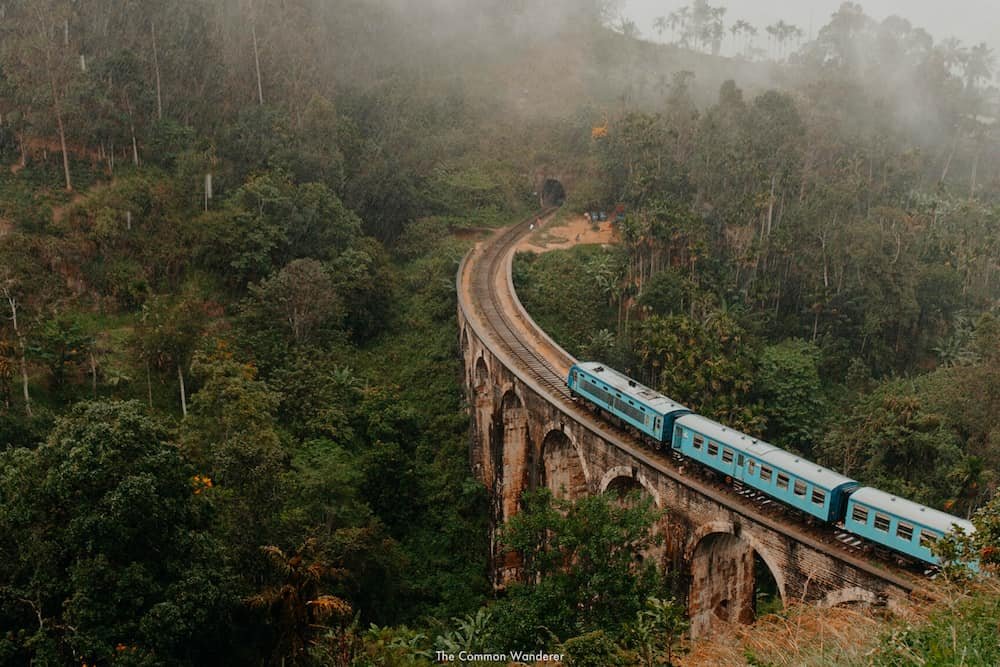
On one hand, you have some of the most epic railway journeys anywhere in the world, including the epic Kandy to Ella train ride, and the southern coastal express from Colombo to Galle (and beyond).
Travelling by bus is a whole level of authenticity in Sri Lanka, with blaring music, flashing lights, and friendly locals making the journey thoroughly enjoyable. And tuk tuks are always fun!
But there are a few dangers to be aware of.
TRAIN SAFETY IN SRI LANKA
While Sri Lankan trains are amazing and generally very safe, tourists and Instagrammers alike have taken to hanging as far out of the doors as possible with their partner to snap the ‘perfect’ shot, particularly on the Kandy to Ella train.
In the spirit of full transparency, we have sat on the footboards and leaned slightly out of this train before (when it was barely moving, and in extremely safe conditions).
Hanging out of doorways, endangering the lives of yourself, your travel buddies, or the locals who take the train is simply not okay. What’s more, some of the best experiences can be found inside the train, not snapping an insta banger.
As always, be careful of your belongings on train journeys, and always watch your bags.
Overwhelmingly though, our train journeys have been the most enjoyable part of our travels in Sri Lanka.
READ MORE | Our complete Kandy to Ella train guide
BUS SAFETY IN SRI LANKA
And then there are the buses. The crazy, chaotic buses. We kinda love them, as they give you such a true Sri Lankan experience - loud music, tight confines, and friendly locals give you an authentic experience unlike anywhere else.
BUT they’re not overly safe or well-maintained, and they’re driven by drivers intent on speeding everywhere. And there’s generally no safety protection, especially if you’re required to stand for periods.
There’s not much you can do about it apart from embracing it, but if you’d prefer to not put yourself in a position of potential danger, steer clear.
TUK TUK SAFETY IN SRI LANKA
Tuk tuks are, of course, synonymous with Sri Lanka, and while we’ve never had any issues with them we’ve seen minor accidents involving one or more sometimes, especially in Colombo or Kandy.
Again, there’s not a huge amount you can control, but if you feel uncomfortable with the speed or driving, make your driver aware and ask them to slow down/drive less recklessly.
Don’t use tuk-tuks without meters in cities, and if you’re travelling rurally, some drivers are known to charge far higher fees and be overly aggressive to secure your business. Try to ask a local about costs before arriving at your destination (most will be happy to help), so you have an idea of what costs to expect.
If the driver becomes belligerent, simply walk away and don’t engage.


IS SRI LANKA SAFE FOR FEMALE TRAVELLERS?
We have to say upfront that we travel as a couple, but for our female readers who are travelling alone, Sri Lanka is, by and large, safe for female travellers.
It’s important to know that Sri Lanka is still a very conservative, patriarchal culture and that you will need to keep this in mind when travelling here. Take the usual precautions you would anywhere in the world: avoid travelling alone at night, buddy up where possible, and keep your wits about you when drinking, etc.
Whether you like it or not, you will need to dress modestly on your travels here, particularly in Colombo.
Most beach and tourist areas are fine with shorts and t-shirts (don’t wear your bikinis around town!), but Mim did find that she got a little unwanted attention (staring) when wearing loose-fitting shorts in more conservative Colombo. Think below knees and covered shoulders.
We never experienced anything of the like, but harassment, ranging from sexually suggestive comments to physical advances and sexual assaults - can and do occur sometimes.
These are most frequent in crowded areas such as marketplaces, railway stations, buses, or public streets, but it’s nowhere near as intense as in places like India.
If you do feel uncomfortable at any point, seek out other travellers or local women/families for help or company.
NOTE | The Sri Lankan authorities have installed a special number (dial 1938) to report sexual harassment.


HEALTH SAFETY IN SRI LANKA | MEDICAL MATTERS
While the below might look a little worrying, most travellers won’t experience any health issues beyond a case of Traveller’s Belly (and to be honest, we haven’t even had this on two trips there!). Here’s what to look out for health-wise in Sri Lanka:
VACCINATIONS + GENERAL HEALTH
WHO recommends that travellers to Sri Lanka have the following vaccinations up to date: Hepatitis A, Hepatitis B, Typhoid, Yellow Fever, Japanese Encephalitis, Rabies (there are several stray dogs), MMR, and Tetanus/Diptheria.
Most travellers will have had some of these throughout their lives already, so it’s worth checking with your doctor for what you might need before you go.
For those travelling with children under the age of five, we suggest speaking with your physician before travelling to the country.
KNOW YOUR NEAREST HOSPITAL, ESPECIALLY IF TRAVELLING WITH CHILDREN
Prior to travelling with children, we were carefree and barely considered our health and well-being, beyond the most basic of travel insurance and taking general precautions.
Aware that travel with children is a different beast, before our recent trip to Sri Lanka, we mapped out and saved local hospitals in each destination we visited, just in case something were to happen - that way we would have peace of mind knowing a hospital was close by.
And sure enough, our daughter suffered a severe allergic reaction (more on that below), and we had to rush to Galle Hospital to receive medical attention.
Thankfully she was fine, but as a result, we now suggest adding hospitals and medical centres to Google Maps before you arrive.
And learning the local emergency service number, which in Sri Lanka’s case, is 110.
BRING YOUR VITAL MEDICATIONS FROM HOME
We discovered just how strict Sri Lanka’s medication governance is when Mark had an eye infection and we needed to buy some eye drops from the Pharmacy.
Given these are pretty standard over-the-counter products back home, we assumed there’d be no issue picking some up here too.
Wrong!
In Sri Lanka, you need a doctor’s prescription for just about everything, and we couldn’t even buy eye drops without visiting the doctor first (and of course, they’d all just shut for the day too!).
If there are items you might need during your trip, like antibiotics, anti-inflammatories or painkillers, eye drops, etc - be sure to pack enough from home to avoid any hassles during your trip.
FOOD SAFETY IN SRI LANKA
The food in Sri Lanka is insanely good (honestly, it’s one of our favourite cuisines!), but food hygiene can sometimes leave a bit to be desired. If you were going to get sick in Sri Lanka, this is likely how it’ll happen!
To avoid getting Traveller’s Belly, we recommend:
Eat at busy restaurants or cafes where the food is being turned over quickly
Make sure your food is cooked fresh if being purchased from a stall
Ensure your meals are properly cooked
Avoid ice cubes (although most restaurants and cafes today purchase cubes made with safe drinking water)
In addition to the above, those with allergies must take extreme caution in the country.
We encountered a severe allergic episode with our toddler, who unbeknownst to us, ended up consuming cashews in a sauce while staying in Ahangama. While we had antihistamine on hand, we had to race to a hospital in Galle to alleviate any further issues.
It was one of the scariest moments of our lives, and one we don’t wish upon anyone.
Sri Lankan cuisine is known to use quite a few allergens, including various nuts, seafood and dairy products.
If you have an allergy, enquire about the ingredients before you eat anything, and make sure you carry an antihistamine or EpiPen (if required) wherever you go.
USE A WATER PURIFICATION BOTTLE FOR WATER
The tap water in Sri Lanka isn’t safe for drinking, but that absolutely doesn’t mean you need to buy plastic bottled water. Seriously, there is no need for a modern human to still be buying bottled water.
Travel with a water purification system (we recently switched to The Grayl after using Water to Go for about a year), and you can fill up directly from the tap, purify your water and filter out any nasties, and drink with confidence.
Seriously, it’s the BEST investment we’ve ever made for our travels - we haven’t bought bottled water in over five years, and have drunk tap water in India, Nepal, and Sri Lanka, and despite travelling through some places with very questionable water (Sri Lanka included), we’re yet to encounter a single tummy bug. Not a single one!
We recommend grabbing one for yourself before visiting Sri Lanka, and you’ll stay hydrated wherever you are.
BUY | The Grayl GEOPRESS water purification and filtration bottles
PREPARE FOR THE HEAT AND HUMIDITY
Sri Lanka is hot. Really hot. Even as warm-blooded Aussies, we struggled during our first trip to the country.
Simply put, you’ve got to keep your fluids up, especially when out exploring (or climbing Sigiriya…!).
Avoid exploring during the midday heat, and always use sunscreen no matter what time of day - the sun is super intense here and can lead to burns in no time.
Additionally, always pack adequate water supplies, and spare cash in case you need to buy an emergency can or bottle.
BEACH SAFETY IN SRI LANKA
It’s weird to talk about beach safety because it’s something we’ve known since we were born - Australia is a place where you learn to swim before you can walk, and spending summers at the beach means we’re generally comfortable around surf.
But for others, especially from Europe and Asia, it’s a different story.
Sri Lanka is a surfer’s paradise, but it’s also got super strong currents, rips and high waves, so being cautious is important when swimming at places like Mirissa, Weligama, Arugam Bay or Hiriketiya.
If you’re not confident, stick to the shallow areas, and if you’re confident, take the usual precautions and steer clear of rips.
For surfers, stay within your limits, or surf with a local guide who can show you the ropes.
IS MALARIA AN ISSUE IN SRI LANKA?
Malaria was formerly a serious problem, but the World Health Organisation declared Sri Lanka malaria-free in 2016.
Doctors presently advise that anti-malarial drugs are not necessary.
WATCH OUT FOR DENGUE FEVER IN SRI LANKA
Dengue fever, however, is an issue and something you need to be aware of when visiting Sri Lanka.
According to the World Health Organisation, in the first six months of 2017, there were 80,732 reported cases of Dengue with 215 deaths.
Of those cases, 43% of these cases were in Sri Lanka’s Western Province, mostly around the capital of Colombo. Incidents generally coincide with the wet monsoon season between May and July.
A mosquito-borne disease, symptoms of Dengue include high fever, severe headaches and body aches, and the potential of a rash or diarrhoea.
Always spray mosquito repellent, especially in the early evening, sleep with a mosquito net, and if you do become ill and suspect dengue, take paracetamol as an initial treatment, but seek medical assistance immediately.
Apparently, Sri Lanka has so far been spared Zika virus, another mosquito-borne disease that can affect pregnant women, although we’d seek advice from your physician and government agencies before travelling (see here).
WATCH OUT FOR STRAY DOGS IN SRI LANKA
There are more than 3 million stray dogs in Sri Lanka, and to be honest they’re almost as ubiquitous to the landscape here as palm trees and tropical paradise.
The good news for travellers is that the dogs are generally extremely friendly and don’t pose any threat to your personal safety (unless, of course, you do something silly like approaching them too quickly or noisily).
Ensure your rabies vaccinations are up to date, and if you do get bitten, seek medical advice straight away.


OTHER SAFETY CONSIDERATIONS IN SRI LANKA
TERRORISM IN SRI LANKA
On 21 April 2019, domestic terrorists attacked 3 churches and 3 hotels in Sri Lanka, leaving more than 250 dead and many more wounded.
The Sri Lankan government took swift action, declaring a national emergency and security was increased across the island. To this day, security is tight on the island, with the Government authorities monitoring the situation and militant groups closely.
Immediately following the attack, governments issued travel warnings to Sri Lanka, which at the time would have voided any travel insurance. These warnings have now been lifted, and you are safe to travel.
That being said, always check official government warnings before visiting the country (UK, Australia), and follow their foreign travel advice strictly.
We’re of the opinion that terrorists cannot win and reduce our freedom, so we encourage you to visit Sri Lanka and enjoy it for what it is; an incredible country with incredible people.
WORRIED ABOUT SAFETY? BOOK A TOUR OF SRI LANKA!
Although we’re definitely advocates for independent travel, we understand some travellers may want to experience Sri Lanka with a guide, and with all the nitty gritty travel details taken care of, as well as the safety of group travel.
Below are selection of tours in Sri Lanka, and the best day tours around the island:
Sri Lanka Encompassed with G Adventures | A 14-day small group tour visiting major cultural sights within Sri Lanka, including the most scenic train ride in the world from Kandy to Ella. Includes expert guides, meals and transport.
BOOK | Sri Lanka Encompassed
Sri Lanka Explorer with Intrepid Travel | A 12-day tour that takes in all the key cultural and tourist areas (including Jaffna in the north!
BOOK | Sri Lanka Explorer
Best of Sri Lanka with Intrepid Travel | A 15-day in-depth cultural tour of Sri Lanka that takes in all the major sights including Sigiriya, Kandy, Galle and Ella.
BOOK | Best of Sri Lanka
SO, IS SRI LANKA SAFE FOR TOURISTS?
YES!
Despite having been through a tumultuous few decades during the bitter civil war, Sri Lanka is an incredibly safe destination to travel to. In fact, we’ve often commented that both of our trips through the country were probably the safest travels we’ve ever had.
Obviously, we need to acknowledge that not everyone will have the same experience as us, nor can any of us be sure that nothing will go wrong on our travels, but overwhelmingly, it’s been our impression that there’s very little for travellers to be worried about here.
Locals are exceptionally friendly, to the point that we were often caught off-guard, expecting an incoming scam or similar when all they wanted was to chat or help us find a seat on a train.
The crime rate is also relatively low, and beyond the usual travel concerns (scams, road safety, and health), it’s rare for crime to be directed towards foreigners.
So, book that flight and be prepared for one of the best countries you could imagine.


ESSENTIAL SRI LANKA TRAVEL INFORMATION
SRI LANKA VISA INFORMATION
Tourist visas are generally issued for a 30-day period, and it’s best to organise it via ETA (Electronic Travel Authority) before you arrive in the country.
To organise your visa, head to the ETA website about a week before your arrival, pay the fee via credit card, and then you should receive the visa confirmation within a couple of days.
On our most recent trip to Sri Lanka (2024), we applied for and received our visa within three working days. However, we suggest applying at least a week in advance, preferably two weeks to be safe, as you must have a valid visa to board your inbound flight.
Prices for the ETA Visa are (as of 2024):
SAARC countries | USD $35 for 30 days with double entry
Non-SAARC | USD $75 for 30 days with double entry
According to the Department of Immigration, all Tourist or Business travellers to Sri Lanka must have e-Visa to enter Sri Lanka (as of 17th April 2024).
If you decide you love Sri Lanka too much to leave just yet (we don’t blame you!), you can renew your 30-day visa twice, and for 30 days each time.
To extend your visa, download the relevant form here, fill it in, and take it to the Department of Immigration & Emigration, Colombo.
Get there as early as possible, and prepare to spend a few hours navigating the Sri Lankan bureaucratic system!
YOU CAN EXTEND YOUR SRI LANKAN VISA TWICE
If you decide you love Sri Lanka too much to leave just yet (we don’t blame you!), you can renew your 30-day visa twice, and for 30 days each time.
To extend your visa, download the relevant form here, fill it in, and take it to the Department of Immigration & Emigration, Colombo.
Get there as early as possible, and prepare to spend a few hours navigating the Sri Lankan bureaucratic system!
ALWAYS TRAVEL WITH TRAVEL INSURANCE
You know the saying; if you can’t afford travel insurance, you can’t afford to travel.
Travel insurance provides you with medical coverage if you get sick or injured, reimburses you if your camera or electronics break, your flight is cancelled, your bags are stolen, or a family emergency forces you to cut your trip short and fly home.
The unexpected can, and does, happen on the road (like when Mark was bitten by a snake in Malawi), and insurance is a safety guard that can save your life, or at least a life of severe debt.
Here are our recommendations, based on 8+ years of full-time travel:
FOR TRAVELLERS | HeyMondo - COVID-19 coverage, comprehensive travel + medical insurance, an app with 24-hour medical support, and no out-of-pocket fees.
* The Common Wanderer readers 5% off your policy by booking through our link here
FOR DIGITAL NOMADS | SafetyWing - COVID-19 coverage, comprehensive travel & medical, and policies can be purchased while already abroad.
CAR INSURANCE | Insurance4CarHire - a great annual car insurance policy


READ THESE ESSENTIAL SRI LANKA POSTS
We’ve got a wealth of information on Sri Lanka, so if you’re planning on visiting, read the below guides and plan the ultimate adventure!
SRI LANKA TRAVEL TIPS | 31 incredible things to do in Sri Lanka, Our essential 3-week Sri Lanka Itinerary, Our 7-day Sri Lanka Itinerary, Everything you need to know before you visit Sri Lanka (39 essential tips!), Where to stay in Galle
SRI LANKA CITY GUIDES | We’ve got in-depth guides to Colombo, Galle, Kandy, Jaffna, Hiriketiya, Mirissa Beach, Ahangama Beach
CULTURAL ATTRACTIONS | Our essential guides to both Sigiriya and Pidurangala, A guide to Polonnaruwa
TRANSPORT GUIDES | Our definitive guide to the Kandy to Ella train, how to get from Colombo to Kandy, how to get from Colombo to Galle
ELLA, SRI LANKA | Our complete guide to Ella, a guide to the Nine Arch Bridge, How to see Diyaluma Falls, Ella accommodation options for every budget (+ our recommendations)
TRAVEL INSURANCE | Don’t leave home without travel insurance (seriously, don’t!). Click here to get the best deals with World Nomads, our trusted travel insurance provider
PHOTOGRAPHY | Love our photography? Wondering what gear we use to get all of our photos around the world?
Click here to view our detailed photography gear guide, as well as our top travel photography tips!
RESPONSIBLE TRAVEL | Responsible travel is important. REALLY IMPORTANT.
Learn our top responsible travel tips to help you, your family and friends travel more consciously around the globe
ECO FRIENDLY PACKING ESSENTIALS | Don’t leave home without our favourite eco-friendly travel essentials
TRAVELLING TO SRI LANKA? YOU’LL LOVE THESE GUIDES!




Some of the links on this guide to Sri Lanka Safety are affiliate links.
If you choose to purchase using these links, we receive a small commission at no extra cost to you. Please know that by using these affiliate links, you're directly supporting The Common Wanderer to stay wandering, the running costs of the site, and our ability to provide you with free content to help you on your travels.
That, and you're officially a legend.
MOND in Hiriketiya is one of Sri Lanka’s original design hotels; architecturally significant, beautifully considered, and still one of our favourite stays on the south coast. This is our full review, including the rooms, food, location, and what to know before you book.